

故事梗概:
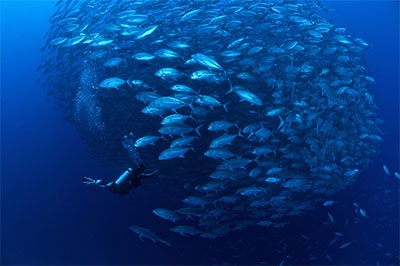
《战栗汪洋》根据真实故事改编拍摄,讲述了一对美国夫妇丹尼尔和苏珊,到太平洋的一个岛上度假。次日清晨,这对都有专业潜水证书的夫妇一起去潜水,结果误入鲨鱼群集的危险水域,等他们发现自己身处危险的时候,送他们过来的游艇却早已经离去,将他们遗忘在茫茫深海。谁能拯救他们?如何才能逃脱鲨鱼的血盆大口?他们的生命危在旦夕……
与鲨共舞:
男女主角在整个电影的七十九分钟的播放时间中不停的对抗着逐渐增多的海洋巨兽。该片一个真正的突破是演员们意识到他们无一例外的正真正受到鲨鱼的威胁,因为影片中所有的鲨鱼都是活生生的蓝鲨,不像其他电影中使用那些道具鲨鱼。导演肯狄斯 说:“我们去了巴哈马和真正的鲨鱼一起完成了这部电影的制作”,但他也承认,要说服演员们和这些动物明星们一起工作不是一件容易的事。
影片拍摄过程中男女主演布兰查德·雷恩和丹尼尔·特拉维斯都在游泳衣里面穿上了防鲨服,但即使是这样,他们的手还是得露在外面。他们没有买保险,肯狄斯这样说:“不可能有人来保这部电影的险,这太冒险了”。但是所有演员们都演得很出色,但是最勇敢的的人还是非女主角雷恩莫属了,“第一天她就被梭鱼咬伤”,肯狄斯说:“但是她坚持了下来,她是个真正的勇士。”
幕后内容:
自从斯皮尔伯格的《大白鲨》之后,关于鲨鱼题材的电影越拍越差,逐渐走入低谷。好莱坞相继推出的《大白鲨》2、3、4和《怒海狂鲨》、《捕鲨者》、《狂鲨之夜》等等电影都没有获得预期的好评,尽管在这一类的恐怖鲨鱼电影中还有萨缪尔·杰克逊(《怒海狂鲨》)、路易斯·哥塞特(《大白鲨》)这些大明星,但这些鲨鱼电影却始终没有重振雄风的迹象。
但是观众还是一如既往的关注着这些鲨鱼题材的电影。尽管影片中充斥着劣质的特技效果,演员的表演也很蹩脚,我们还是等看到《怒海狂鲨》的票房达到7.5亿美元的好莱坞票房神话,观众对于鲨鱼题材的电影充满了期待。
终于在这个夏天,我们等到了《战栗汪洋》这部情节极其紧张的低成本电影。这部圣丹斯电影节的上榜电影是继《大白鲨》之后最好看的鲨鱼电影,而我们应该把这一切归功于本片的导演,四十岁的克里斯·肯狄斯,是他续写了鲨鱼电影的辉煌。肯狄斯说:“我们起初并没打算拍一部鲨鱼电影, 因为《大白鲨》是不可逾越的高度。要想有所突破,我们必须要换个角度拍摄鲨鱼电影”。
2004年圣丹斯电影节上,《战栗汪洋》在众多的竞争者中胜出听起来就像异端邪说。《战栗汪洋》不像斯皮尔伯格那样利用数码科技制作特级镜头来吓你,而是将带你进入真正的海洋世界。它的确能让你感受最原始的恐惧。而导演克里斯·肯狄斯的工作方式只能用行为艺术家那种神经质的创作热情来解释。 《战栗汪洋》是继1999年圣丹斯获奖电影《女巫布莱尔》之后最恐怖的电影。在制造恐怖氛围的电影制作史上,可能没有哪部电影比《战栗汪洋》更能折磨人的神经了。正如圣丹斯的影评家们所说,《战栗汪洋》的预算很低,导演没钱造一个像《大白鲨》里的机械鲨鱼,当然也不可能用电脑高科技制作一个海洋杀手。而就像所有热衷于独立电影拍摄的真正艺术家一样,克里斯希望带给观众的是最真实最自然的画面,他的方法是把片场设在离岸十八公里的巴哈马海洋上,用真正的鲨鱼来演出。肯狄斯自己都承认“这在当时看来真的有点儿冒险”, 但现在看来毫无疑问,这个冒险是值得的。
在现在这个古板老套电影层出不穷的时代还是有好的低成本独立电影作品。这些电影确实把创新的精神被保留了下来。今年圣丹斯就把这部《战栗汪洋》带给了观众,而它也一定不会另你失望。想看恐怖、惊悚的电影吗?去看《战栗汪洋》吧……
《战栗汪洋》(Open Water)本周开始在全美公映,以1180万美元的成绩从原来的第17位一下子窜升到了第5位,比坐火箭的速度还快。这个根据真人故事改编的电影已经在上映三周后取得了1480万美元的票房。《战栗汪洋》的成本低于50万美元,负责发行的狮门影业公司在圣丹斯电影节上用200万美元的价钱买断了发行权,属于小成本、大回报的典型战例。
正版国内未必会引进,不知道几时有D版碟出?
昨天刚去万商找过,没见D
《战栗汪洋》是否根据真实故事改编拍摄? 看来似是宣传技倆多些
以下摘自CDNN (一个世界性的潜水资讯网络), 非常值得大家想看这电影的朋友了解多些. 这段报道详细描述1998年在大堡礁一对潜水男女,被遗留及消失在大海汪洋中的真实故事. 不是泼冷水,只是希望大家知多一些,免被误导. 仔细看完这段报道后,如果想看才去看吧
http://www.cdnn.info/article/open_water/open_water.html
The True Story Behind Disturbing 'Open Water' Movie
Powered by CDNN - CYBER DIVER News Network
by DAVID FICKLING
In 1998, Tom and Eileen Lonergan disappeared off the Great Barrier Reef after a diving company accidentally left them behind in shark-infested waters. Their bodies were never found. David Fickling reports on the true story behind a disturbing new film...
The sun is bright and hot as you break surface. You squint to see the outline of a boat. After 40 minutes of scuba diving you feel disoriented. You paddle round to see whether the boat is behind you, but there is nothing: just calm, blue ocean, stretching to the horizon.
Such is the scenario of Open Water, the surprise hit of this year's Sundance film festival, which has also met with rave reviews across the American movie press. Shot on handheld digital cameras with a shoestring budget, it depicts the disintegration of a happy American couple after they are abandoned in shark-infested seas off the Bahamas during a dive holiday.
Tom and Eileen Lonergan
The promotional material boasts that the film is "based on true events", but its makers are now parrying questions about exactly which true events are involved. Yet few doubt that the inspiration is the case of Tom and Eileen Lonergan, American tourists who disappeared off Australia's Great Barrier Reef on January 25, 1998. The couple had wound up in Australia after several years of travelling round the world. They had met and married at Louisiana State University, where Eileen had taken up scuba diving and persuaded Tom to join in her hobby. For two years they had taught for the Peace Corps in the Pacific island country of Tuvalu, before spending a further year in Fiji.
They were planning to travel round the world before heading home, but first the couple were determined to visit the Barrier Reef. In Port Douglas, an upmarket diving and sailing town towards the end of the road north through Queensland, they decided to take a day trip on a 26-passenger boat, the Outer Edge. For A$160, the five crew would take them for three dives on the ribbon reefs, a stack of broad shoals that run along the seaward ramparts of the Barrier Reef, 40 miles offshore. On their third dive, round about 3pm, they headed off together and were last spotted swimming calmly 12m down. When they came to the surface after less than an hour underwater, the Outer Edge had gone.
Being left behind on a dive is not an instant death sentence. Paul Lucas, a tourist from Leicester with less than 10 dives under his belt, survived for 40 hours in stormy seas in January 2000, after he was left behind by a dive boat in northern New South Wales. A diver is wearing an inflatable lifejacket and has the air to inflate it in a tank strapped to their back. The danger in the blazing heat of tropical Queensland is that, without fresh water, someone floating in the middle of the ocean may dehydrate long before help can arrive.
The day after the incident the Outer Edge brought another tour party to the area, and one diver found six dive weights resting on the bottom. Oblivious to what had happened the previous day, a crew member described the find as a bonus.
At that point Tom and Eileen might still have been alive just a few miles away, using the empty dive belt to bind themselves together. They certainly appear to have survived the night: several months later a fisherman 100 miles north of the site found a dive slate which records their thoughts as dawn broke that morning. In a wobbly scrawl faded by months in the water, Tom Lonergan had written: "[Mo]nday Jan 26; 1998 08am. To anyone [who] can help us: We have been abandoned on A[gin]court Reef by MV Outer Edge 25 Jan 98 3pm. Please help us [come] to rescue us before we die. Help!!!"
Other clues offered tantalising glimpses of what might have happened. A wetsuit of Eileen's size washed up in north Queensland in early February; scientists measuring the speed of barnacle growth on its zip estimated that it was lost on January 26. Tears in the material around the buttocks and armpit had apparently been caused by coral.
Inflatable dive jackets marked with Tom and Eileen's names were later washed ashore north of Port Douglas, along with their tanks - still buoyed up by a few remnants of air - and one of Eileen's fins. None showed any signs of the damage you would expect from a violent end, suggesting that the couple were not the victim of a shark attack, as the film suggests. Experts at the inquest speculated that, drifting helplessly back and forth on the tides in the building heat of the tropical sun, the couple may have been driven delirious by dehydration and have voluntarily struggled out of their cumbersome outfits. Without the buoyancy provided by their dive jackets and wetsuits, they would not have been able to tread water for long.
Publicity surrounding the case spelled disaster for the Queensland dive industry. Nearly 50,000 people work in Queensland's Barrier Reef tourist trade, which is worth A$4.3bn and hosts nearly 4m day trips every year. High-profile horror stories could irrevocably taint the image of local operators. Worse still, this had not been simply an unavoidable accident. Dive boat crews are meant to count every diver into and out of the water and then carry out a further count when the boat leaves the dive site, but somehow the Lonergans had slipped through the net.
Outer Edge skipper Jack Nairn said that he had ordered a crew member to carry out the count, and that the numbers had become confused because two passengers had jumped into the water halfway through. In any case, no one seems to have noticed that two sets of diving gear were missing as the boat steamed back to Port Douglas, nor was any alarm raised the following day when the Outer Edge returned to the same spot. It was only two days later, when Nairn found a bag containing the Lonergans' wallet and passports on the boat, that the alarm was raised. By that time, Tom and Eileen would probably already have died.
The industry's damage-control mechanism was desperate and unpleasant. Rumours started spreading - many of them put about by the Outer Edge's owner, Tom Colrain - that there was more to the Lonergans' case than met the eye. Melancholy passages in the diaries of Tom and Eileen were raised as evidence that they had committed suicide, that he had killed her in a murder-suicide, even that they had faked their own deaths and sped off to a new life in another boat supposedly spotted nearby. Sightings of the Lonergans began pouring in from all over Australia.
In the inquest and subsequent trial of Jack Nairn on manslaughter charges, the speculation reached fever pitch. "The defence attorney used these diaries to absolutely slander, to absolutely destroy these two people's reputations," says Eileen's father, John Hains, who travelled to Cairns for the hearing. "I was disappointed in the verdict [in which Jack Nairn was found not guilty of manslaughter]. I felt like the jury didn't believe that they were dead, and to me that was the essence of the trial, was to prove that they had died."
Six years on, the names of Tom and Eileen Lonergan are still those most likely to shut down a Cairns conversation, so the release and publicity surrounding Open Water is far from welcome. Jack Nairn still lives in the area despite losing his business as a result of the publicity and debts surrounding his trial. He initially refused to talk about the case, and would only discuss how the fallout from the case had affected him. "The reality of it is that the thing creates emotional turmoil for all of the people involved," he says. "It's incredibly unsettling and stressful for myself and my children, and for us it's a terrible thing that [Open Water] has been made. This is really very bad for the industry as a whole."
Nairn's concerns about the impact of the film on tourism are not surprising, given the Queensland dive industry's struggle to rebuild its squeaky-clean image in the wake of the Lonergans' deaths. In a check on 59 dive shops by Queensland health and safety inspectors in 2002, a total of 76 notices were issued for failure to do proper head counts, dive logs or lookouts - the main issues highlighted three years earlier in the Lonergan inquest.
Hains has no truck with the release of Open Water. "As far as the movie's concerned we're not interested. We won't see it," he says. Yet remarkably, he holds no grudge against the crew and passengers on the Outer Edge. "I don't have any hard feelings against anybody, because it was an accident," he says. His only disappointment is that among all the equipment washed up on the shores of north Queensland, there was never a trace of his daughter's body. "It leaves a big hole in you to lose your kid, that's part of your life. I wish they had found them, so we had something. I suppose we have the Great Barrier Reef. They're part of that."
还有希望不要像已往的鲨鱼电影一样误导,把鲨鱼凶殘的一面不成比例的扩大,令人完全莫名其妙地恐惧鲨鱼.
其实多年前的JAWS,导演史匹堡和幕后一些協助制作的鲨鱼专家,均对电影带来群眾对鲨鱼深远和错误的理解深感遗憾 (一般观眾只把注意力放在鲨鱼凶殘的一面,人类捕杀鲨鱼的场面都毫无记忆).
也许大家都对这大段的英文望而生畏了(其实我也是),只不过有几个词吸引了我的注意,不得不读下去
有没有人想过,当你完成了一个dive,心满意足的浮上水面,忽然发现那原本应该在这里等着你,接你回到安全的陆地的船只踪影全无,围绕你的唯有水天茫茫,周围只有咸的不能入口的海水以及不知在何处觊觎着一顿美餐的鲨鱼。而这,并不是纯粹的幻想,而是实实在在发生过(不止一次!),也很有可能再次发生的情况。
Open Water我没看过,不过想来总该是个大团圆的结局,然而遗憾的是它所依据的真实故事,结尾却远远没有那么光明。一对为和平组织工作的,梦想着环游世界的年轻夫妻Tom和Eileen ,却在他们环球之旅的第一站,就消失在大堡礁的海水中,永远也不会有人知道,到底发生了什么。
这对夫妻都有专业的潜水证书,因此当他们到达昆士兰后,就参加了潜水一日游。一只能够乘坐26人的船,“外刃号”(没想到真的是一把利刃,无情的割断了两个人的生命线),和船上的5个工作人员将带他们去40英里外的带礁做3次下潜。他们在大约下午三点的时候做第三次下潜,仅仅下潜了12米,然后在水下呆了不到一个小时。然而当他们再度浮出水面时,船已经走了。
开船时要数一数人数,这是任何潜水教材上都会提醒的。然而“外刃号”上就没有一个人发现少了两个人,也没有任何人注意到两套装备不见了。甚至在第二天,“外刃号”载着另一批游客来到同一地点,其中一个游客发现了六块配重铅块 ,工作人员还戏称这是一项额外奖励。那显然是Tom和Eileen扔掉的,为了保持浮力,并且可以用腾空的配重带拴住彼此,防止失散。直到两天后,船主在船里发现了Tom和Eileen的包,里面有他们的钱包和护照,才报警并开始搜救,然而那时候,没有淡水。没有食物,Tom 和 Eileen 很可能已经死了。
Tom 和 Eileen 并不是死于鲨鱼的袭击:写着他们的名字充了气的潜水夹克连同里面还有一些气的气瓶以及Eileen 的一只脚蹼后来在达拉斯港的北面被冲上了岸,上面没有任何暴力袭击的痕迹。他们肯定活到了第二天早上:几个月后,一个渔夫在潜点北面100英里的地方捡到一块潜水用的写字板,上面写着:“1998年1月26日(星)期一上午8:00,致任何可以帮助我们的人,我们于1998年1月25日下午3:00被“外刃号”遗弃在阿金库尔礁,请帮助我们,在我们死之前把我们救出去。救命!!!”三个惊叹号,惊心动魄,虽然在海水中浸泡了几个月,一些字迹已经模糊,而一对年轻的生命求生的呼号依然清晰可辨。然而没有人知道后面发生的事,只有一些其它的线索可以让人猜测:一件正好是Eileen尺码的潜水服在二月初被冲上了北昆士兰,科学家测量了拉链上藤壶(一种海生藻类)生长的速度,推算出它是在1月26日被丢弃的。臀部荷腋窝的破口显然是珊瑚造成的。审讯专家推测,在热带的烈日曝晒下漂流在海面上,他们很快就会因脱水而陷入昏迷。他们很可能是无意识的挣脱了感觉笨重的设备,但是没有BCD和潜水服的浮力,他们根本不可能在海面上停留很长时间。
悲剧本该就这样结束,留下悲伤的父母和永远拍打不停的波涛。然而人世间的黑暗却是比大海还更加深不可测。船主,他的名字叫Jack Nairn,为了推卸责任,居然挖空心思的编造了他们本来就是要去自杀的,甚至说是TOM杀了EIllen后自杀的,又胡说什么他们很可能登上了另一艘等在附近的船,去开始新生活了。最终他竟然被陪审团宣判无罪,并且至今仍然居住在原来的地方,虽然他的潜水店关了门。当被问起这件事的时候,他拒绝谈论,并且抱怨说这件事对他和他的孩子们造成了很多困扰和很大压力,Open Water的上映对他们来说是非常糟糕的,并且会对整个潜水行业造成很坏的影响(MMD,我实在忍不住了,你害死了人对行业就没有影响,别人说说反而有影响,看来这种混蛋逻辑哪里都有)。
Eillen的父亲没有起诉任何在“外刃号”上的职员或游客,他说“我对任何人都不怀恨,因为这是一桩意外。“他唯一的遗憾是在所有冲上岸的设备中都没有我女儿的一丝痕迹,“失去孩子会给你的生命留下一个大洞。我希望他们能够找到我的孩子们,这样我们至少还有点什么。有时候我想我们还有大堡礁,他们现在是它的一部分了。”
在2002年昆士兰健康和安全巡视员对59家潜水店的检查中,一共发现了76项违规行为,包括没有正确的清点人数(也就是害死Tom和 Eillen的)、没有正确的潜水纪录和没有正确的进行守望。
和原文一样, 不能自我的带着伤感的心情一口气读完.
MERMAID, 谢谢你精彩的翻译.
谢谢MERMAID的翻译。。
看后心理真不是滋味!想起多年以前苏联宇航员与他的女儿最后对话。。。仅仅是因为小数点的计算错误,飞船无法正确返回着陆,妻子和他的小女儿,眼睁睁看着亲人以秒在计算生命!!
凄然泪下。。。。
仅仅是因为一些人的工作疏忽,幸福的家庭破碎啦。。。(这不是误差这是无法挽回不可原谅的错误!!)
愿每个人都能够尽忠职守!
今天在东门已经买到了D9的碟