
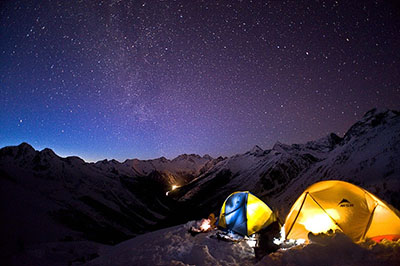
本人乃新驴一头,刚刚在钻研精华时,见一老驴说是怕雷击而特意用上玻纤杆的帐篷,心中顿生疑问.......恰逢雷雨季节将至,与各位老驴探讨一下。
我姑姑是地质工作者,很小的时候就听她说起防雷的故事:在空旷野外,若碰到雷雨天气,他们无处可避时,会平躺在地上,将地质锤在身边竖起.....就算真的发生雷击,电流通过地质锤下地总比经过身体下地好啊!
另有一次看电视,说是英国科学家研究为什么有人遭雷击而幸免。做一试验:分别将一块表面干燥的木头和一块表面湿漉漉的木头在模拟雷击的高压测试具里打高压.......结果表面潮湿的木头,电流主要经表面的潮湿层通过,木头并无大碍;而干燥的木头,电流则从木头内部通过,整块木头炸的粉碎!!
那我们在野外,置身于铝杆帐篷里时,万一发生雷击,罩着我们的铝架那铝杆不就正是身边的地质锤吗?不正是保护我们的旁路接地线吗? 若是用的是玻纤撑杆,它的绝缘性能比人体还要好,那闪电不是更容易直接打到我们身上吗?(五香驴肉的来由?
 )
)
以上是我的看法,不知是否真的与实际情况相符,希望各位老驴能在雷雨到来之前讨论出个结果来.......
哈哈,厉害,这样都能想到。。。
那先来个假设,如果你的帐篷是1米高,那你被雷劈中的可能性是多少???
然后,如果你在帐篷里面被雷劈中帐篷杆,你估那时候的电压是多少???你会电弧会不会把你烤成焦碳???
避雷针的作用是“引雷”,而不是“避雷”。正确的名称应是“引雷针”,但“避雷针”这个名词是从英文译过来的,原文并没有避雷的意思,是百余年前的译者根据自己的理解所译的,一直流传至今。大家用惯了,只要认识了它的作用,延用这个名词也无妨。
它的作用是把闪电引向自身,并沿着它流入大地。
也就是说,它比周围的建筑物或要保护的设施高,在雷暴期间把云中的闪电通过自身引向地面,但帐篷本身没有接地,所以就算把雷引下来了也只能变成一个电烤箱,那里面的人就变成烤肉了。。。
其实我一直想让那些推荐坡杆的生产商做个统计先.一年因用铝竿而被烤掉的全球驴子有多少,看看跟中六合采的机率作个比较,然后再来推荐. 最好不要拍脑袋想当然
尖端放电,要尖的栋高的金属才会有引电效果,我系电力工人,嘿嘿
避雷针引电不是将电荷慢慢的引走而不造成大量积聚吗?
在空旷的地方遇到雷雨,遭雷击的可能并不像某些人想象的那么小.....


这里有个遭雷击而幸免的例子:弗朗西斯 西德尼·施米特(1900-1949) 他是一位英国登山运动员,因登上珠穆朗玛峰而闻名遐迩。可是他差一点在阿尔卑斯山上丧命。一个雷电把他击得失去了知觉,但是由于他那身湿漉漉的衣服吸收了大部分电荷,从而使他幸免于难。
这个例子说明,在我们身外能有一个优良导体替我们的身体承受雷击是多么的幸运.......所以,我认为铝杆的会较好!
至于有的DX怀疑铝杆没接地的效果,其实是误解了铝杆的作用:铝杆只是在雷击时,担当起与身体并联的一个导体的作用,让绝大部分电流通过铝杆而不是身体下地。雷击后,铝杆可能会熔化甚至气化,这比我自己烧焦或者气化可是好多了.....
绝对正确,在空旷地方遭到雷击的可能性很高,不过也要想回来,在遭到雷击后人畜不S的比率又是多少???
给大家讲一个事例。。。现在摘抄一些下来。。。
两个潮安县磷溪镇虹沟里村一位14岁的孩子小陈,在用自行车搭同学上学路上遭遇雷击,造成身体大面积烧伤。他前胸一直连到大腿,满是被烧伤的痕迹,由于疼痛,他不时发出阵阵的呻吟声。医生说,小陈现在还没脱离危险期。
那么,在雷雨天,我们应该如何做才能尽量避免遭雷击呢?
市防雷所工程师林振和:出现雷的时候,如果我们在室内,要关好门窗,还要切断电源,无避雷设施的电源,无避雷设施的 天线这些东西。另外,避开这些后,我们要关好门窗,不要接触水龙头和有导管的煤气炉,这点很重要。
如果市民在室外遇到电闪雷鸣的天气而又找不到合适的避雷场所,这时,要以最快的速度双膝跪地,双手抱头,以防雷击。而千万不能用金属物举在头上。象小陈被雷击这事,有可能就是因为坐在后座的同学举着把伞,引来雷击。
林振和:在室外、旷野、上空雷很响的时候,我们要趴在地势低一点的地方,千万不要到大树下,电线杆下避雷。在公路旷野行走,千万不能用金属物举在头上。
——摘自潮洲广播电视中心
http://www.czbtv.com/msxw/t20060412_23557.htm
这样的例子不是一个半个,看那里提供的资料:
2001年7月10日,潮安县铁铺镇一雨亭遭雷击,造成在亭内避雨的8名村民6死2伤。
2002年8月9日,市区祭鳄亭遭遇雷击,造成1死2伤。
2002年5月30日,古巷镇古二瓷厂遭遇雷击,损失18万元。
2002年9月15日,华业包装有限公司遭雷击,损失80万元。
2004年7月28日,某通讯公司亭头基站受雷击,损失5万元。
2004年8月20日,潮安县庵埠镇一砖厂遭雷击,造成1人死亡。
单这个小地区,4年时间有这么多雷击事故,损失百多万,S伤十几人,那又有多少是被雷劈后没什么事的呢???
见上面用红字标注,防雷所工程师已经对我们说,雷雨天公路旷野行走,千万不能用金属物举在头上,这样只会增加被雷击的几率,那同我们睡在铝竿帐篷里更容易被雷级的道理一样。。。如果被雷击中铝竿,其电压可高达数百万伏,瞬间电流更可高达数十万安培,产出的温度也可达几百甚至上千度,想想如果企求在帐篷里被雷击而安然无事可能比见耶苏艰难得多。。。
我想你想偏了......如果按这个逻辑,那不变成了因为有避雷针才被雷击??
你扎营的地方,如果没有选择,就是你的帐篷最高,那它就是被雷击概率较大的目标.....在雷击真的发生的时候,罩在你身外的金属物对于减低你身体被雷击的概率有好处......我是这样想的。
下面的文字是个参考:
英国科学家进铁笼触摸百万伏高压电
作者: 来源: 广州日报网络版 时间: 2005-06-16 14:52:52
南方网讯 两位英国科学家下个月将在伦敦进行一次危险的电力学表演。根据表演计划,其中一名科学家将把另一位科学家关进一个铁笼子里,然后用数百万伏特的电流对其进行电击。鉴于表演的危险性,两名科学家事先都买好了价值1200万英镑的保险。
由观众决定谁进笼子
据英国《泰晤士报》15日报道,这两位科学家分别是心理学家理查德·怀斯曼和物理学家西蒙·塞恩。西蒙同时还是一位播音员和作家。在下个月的“科学剧场”表演中,理查德和西蒙中的其中一人就将冒着生命危险,被关进一个类似棺材的金属笼子里,“迎接”高达数百万伏特的电流。
“科学剧场”表演将从7月4日开始,在伦敦的Soho剧院一连上演9场。在演出的高潮部分,观众将通过投票,来决定由理查德还是西蒙进入笼子。
“法拉第笼”保障安全
虽然100万伏特的电流足以将一个人活活电死,但理查德教授和西蒙博士的人身安全事实上还是有相当保障的。因为他们将被关进的笼子,并不是普通的铁笼子,而是一个名叫“法拉第笼”的金属笼。这个笼子以19世纪的物理学家、电磁学奠基人法拉第的名字命名。由于经过特殊设计,电流能够从被关在里面的人身上安全通过。
不过,如果理查德和西蒙中的任何一人将一根手指伸出笼子外的话,他就将面临致命的危险。那时他就会如同坐上了一张高压电流的电椅,一不小心就被电死。因此,在表演过程中,笼子将被包围得很严实。
1200万英镑的保险
理查德教授目前在英国赫特福德郡大学教书,他表示,刚开始时他想从现场观众中找一名自愿者,来进行这个表演,但这个提议被维斯敏斯特政府否决了。而维斯敏斯特政府不仅是剧院的管理者,同时是他的保险承保人。“于是我们决定,只能由西蒙和我来做试验品。”理查德说。
理查德还表示,在表演过程中,观众和表演者都将处在电流可及的最大范围之外。“每个人都将处在电流的最大范围之外,不过也不会离得太远。正因为如此,我们不得不投了1200万英镑的保险。天哪,我真希望我们不会需要这份保险赔偿。”理查德说。
名词解释
“法拉第笼”是一种用于演示等电位、静电屏蔽等原理的设备。它是由笼体、高压电源、电压显示器和控制部分组成。其笼体与大地连通,高压电源将电流输送到放电杆,根据接地导体静电平衡的条件,笼体是一个等位体,内部电位为零,电场为零,电荷分布在接近放电杆的外表面上。“法拉第笼”还可以有效地隔绝笼体内外的电场和电磁波干扰,这叫做“静电屏蔽”。(本报综合报道)
看来买粗大点的铝杆帐篷好,这样万一遭到雷击,可以吸收绝大部分电击,如果再穿件湿透的大衣睡觉就更加保险了。。

哈哈,这个想法是不正确的,知道建筑物的防雷工程是如何做的吗???首先在建筑物的顶上四周焊一圈铁丝,然后要与建筑物的主梁钢筋焊接,而且要保证电阻少于XX值,这就是所谓的天网,然后在地下要挖深1米到2米,半个篮球场大的坑,在里面铺焊钢筋,这就是所谓的地网,最后把天网和地网焊接起来,电阻也在XX值以下,如果是油库或危险品仓库等就要求更加严格,阻值要更小。。。当然实际施工起来还不这么简单,我只不过是在公司搞防雷工程时负责协助及验收而已。。。
天网作用是引雷,地网作用是把大量电荷更好更快速分散到大地里面,所以单有天网(铝杆)而没有良好的接地,反而把自己烤焦。。。
其实最好的防雷击方法是在雷雨天留在家里不出去,呵呵。。。
没必要去逞强,如果看天气预报有雷雨就取消行程吧。。。
夏天出游,下雨是常事......
夏天下雨,打雷是常事......
我们不该因噎废食嘛。
再说,不是说怎样就安全了,讨论的只是概率问题......
所以,正确的做法是选择最安全的扎营地,而不是寄希望于概率上。
找到安全的地方扎寨绝对是最稳妥的办法......


这不是在讨论,万一.........那么........
人被电击,一般会造成心脏骤停。所以,根据以上各人的建议:如果喜欢把自己烤五分熟,可以生前进入铝杆帐篷并穿上潮湿的大衣;如果喜欢焦一点的,就进入玻杆帐篷并保持干燥。
我有同学在电力公司工作,他们有同事因违反操作规程,不慎被大概30万伏高压拉弧电击......在医院撑了一个月,终是不治。当时被电击部位外表无恙,里面已经焦黑!!
所以,只有焦的,没有五分熟的......
偷换概念,,,,我是说要统计"因用铝竿而被烤掉的驴子"的数量不,目的是说用铝竿不一定想很多人想的那么可怕,而不是说被闪到的机会小
想到一个更搞笑的解决方法。。。
就象第一贴那里说的,LZ的姑姑遇到打雷时平躺下来,然后把地质锤放旁边引雷电,这个做法很正确,不过要记住千万不要抓住,也要离开一点距离,那同理,我们在帐篷里的话,帐篷杆是比我们高的,所以我们就如同在地质锤里面,雷劈下来的话我们就在内部被烤熟了。。。
还有一个问题要说一下,如果是雷雨的话,就不存在波杆铝杆哪个更绝缘的问题,因为整个帐篷都湿了,所以整个帐篷都是导体,一个现成的避雷针,而帐篷杆是在外帐里面的,这点也要注意。。。
所以,我想到一个很绝的方法,如果打雷,马上把帐篷拆了,把两支杆在我们两边隔十米左右竖起来,起码也有三米高,在两端就变成两支避雷针,然后我们钻到帐篷里面平躺下来,那被击中的机会就大大减少。。。
哈哈~~~~~~~~~~~~~


实用点发挥一下,如果遇到雷雨,就把手杖拉至最长扎进泥里竖起,帐篷调至最矮,人跪在帐篷里,可以念阿弥陀佛~~~~~
每年到夏季
就担心这个问题
网上也开始讨论
但一直没有一些令人信服的帖子出来指导大家怎样避雷
有兴趣看看这里吧,说得非常详细了:
http://www.lightningsafety.noaa.gov/outdoors.htm
Lightning Risk Reduction Outdoors
When Thunder Roars, Go Indoors!
Printer Friendly Version
This document has two main sections: lightning safety when a safe location is nearby and risk reduction--not safety!--when a safe location is NOT close. No place is absolutely safe from lightning; however, some places are much safer than others. The SAFEST location during lightning activity is a large enclosed building, not a picnic shelter or shed. The second safest location is an enclosed metal vehicle, car, truck, van, etc., but NOT a convertible, bike or other topless or soft top vehicle.
Safe Buildings
A safe building is one that is fully enclosed with a roof, walls and floor, such as a home, school, office building or a shopping center. Even inside, you should take precautions. Picnic shelters, dugouts, sheds and other partially open or small structures are NOT safe.
Enclosed buildings are safe because of wiring and plumbing. If lightning strikes these types of buildings, or an outside telephone pole, the electrical current from the flash will typically travel through the wiring or the plumbing into the ground. This is why you should stay away from showers, sinks, hot tubs, etc., and electronic equipment such as TVs, radios, and computers.
Lightning can damage or destroy electronics so it's important to have a proper lightning protection system connected to your electronic equipment. The American Meteorological Society has tips for protecting your electronics from lightning.
Unsafe Buildings
Examples of buildings which are unsafe include car ports, covered but open garages, covered patio, picnic shelters, beach shacks/pavilions, golf shelters, camping tents, large outdoor tents, baseball dugouts and other small buildings such as sheds and greeenhouses that do not have electricity or plumbing.
Safe Vehicle
A safe vehicle is a hard-topped car, SUV, minivan, bus, tractor, etc. (soft-topped convertibles are not safe) . If you seek shelter in your vehicle, make sure all doors are closed and windows rolled up. Do not touch any metal surfaces.
If you're driving when a thunderstorm starts, pull off the roadway. A lightning flash hitting the vehicle could startle you and cause temporary blindness, especially at night.
Do not use electronic devices such as HAM radios or cell phones during a thunderstorm. Lightning striking the vehicle, especially the antennas, could cause serious injury if you are talking on the radio or holding the microphone at the time of the flash. Emergency officials such as police officers, firefighters, security officers, etc., should use extreme caution using radio equipment when lightning is in the area.
Your vehicle and its electronics may be damaged if hit by lightning. Vehicles struck by lightning are known to have flat tires the next day. This occurs because the lightning punctures tiny holes in the tires. Vehicles have caught fire after being struck by lightning; however, there is no modern day documented cases of vehicles "exploding" due to a lightning flash.
Bolts from the Blue
There are times when a lightning flash can travel horizontally many miles away from the thunderstorm cloud itself and then strike the ground. These types of lightning flashes are called "Bolts from the Blue" because they seem to come out of a clear blue sky. Although these flashes are rare, they have been known to cause fatalities.
When a Safe Location is Nearby:
Seek safe shelter when you first hear thunder, see dark threatening clouds developing overhead or lightning. Count the seconds between the time you see lightning and hear the thunder. You should already be in a safe location if that time is less than 30 seconds.
Stay inside until 30 minutes after you last hear thunder.
Figure: When you hear thunder, run to the nearest large building or a fully enclosed vehicle. You are not safe anywhere outside.
Click here to calculate how far lightning is away from you
Plan Ahead! Your best source of up-to-date weather information is a NOAA Weather Radio (NWR). Portable weather radios are handy for outdoor activities. If you don't have NWR, stay up to date via internet, TV, local radio or cell phone. If you are in a group, make sure all leaders or members of the group have a lightning safety plan and are ready to use it.
Determine how far you are from a safe enclosed building or a safe vehicle. As soon as you hear thunder, see lightning or see dark threatening clouds, get to a safe location. Then wait 30 minutes after the last rumble of thunder before you leave the safe location. If you are part of a group, particularly a large one, you will need more time to get all group members to safety. NWS recommends having professional lightning detection equipment so your group can be alerted from significant distances from the event site.
When groups are involved, the time needed to get to safety increases. So you need to start leaving sooner. Your entire group should already be in a safe location when the approaching storm reaches within 5 miles from your location.
Here some two common scenarios with suggestions on how to safely respond.
Coach of Outdoor Sports Team
You are a manager of a little league team and have a game this evening at the local recreational park. The weather forecast for the day calls for a partly cloudy skies, with a chance of thunderstorms by early evening. You arrive in your vehicle while the kids arrive with their parents. Once arriving at the park, you notice the only buildings are the the restrooms, an enclosed building. Shortly after sunset, the skies start to cloud up and you see bright flashes in the sky to the west. The local radio station mentions storms are on the way.
In this case, the safest locations are the vehicles the kids came in or the rest rooms. You should have a choice of allowing the kids to go back to their vehicles or bring everyone into the restrooms. It is important NOT to stay in the dugouts as they are not safe place during lightning activity. Once at a safe place, wait 30 minutes after the last rumble of thunder before going back outside.
Family at the Beach
You plan to go to the beach or lake later this morning with the kids. The weather forecast calls for a nice morning followed by a 30 percent chance of afternoon thunderstorms. You decide to head for the beach in your minivan. The beach is about 5 minutes from the parking lot. The only nearby buildings are picnic shelters. By early afternoon you notice the skies darkening and hear distant thunder. What would be your lightning safety plan of action?
In this case, the best place to go is your car. Do NOT seek shelter under the beach picnic shacks because these are not safe in lightning storms. Wait 30 minutes until after the last thunder crack before going back to the beach or driving home.
Camping
You and your family are camping. As you and your spouse are preparing dinner on the camp stove, you here rumbles of thunder in the distance. You look around and you see your tent is nearby, and a large picnic shelter is just down the trail. Your car is about ¼ of a mile away parked at the trailhead. What should you and your family do?
In this case, the smartest thing to do is to round up your family and get into your car. The tent is not a safe place to be as it offers NO protection from a lighting flash. The picnic shelter is also not a safe location. (Both the tent and picnic shelter will keep you dry…but they offer NO protection from a lightning flash). It is best to remain in your vehicle for about 30 minutes after the last rumble of thunder is heard.
When a Safe Location Is Not Nearby
The lightning safety community reminds you that there is NO safe place to be outside in a thunderstorm. If you absolutely can't get to safety, this section is designed to help you lessen the threat of being struck by lightning while outside. Don't kid yourself--you are NOT safe outside.
Being stranded outdoors when lightning is striking nearby is a harrowing experience. Your first and only truly safe choice is to get to a safe building or vehicle. If you are camping, climbing, on a motorcycle or bicycle, boating, scuba diving, or enjoying other outdoor activities and cannot get to a safe vehicle or shelter, follow these last resort tips. These will not prevent you from being hit, just slightly lesson the odds.
Do NOT seek shelter under tall isolated trees. The tree may help you stay dry but will significantly increase your risk of being struck by lightning. Rain will not kill you, but the lightning can!
Do NOT seek shelter under partially enclosed buildings
Stay away from tall, isolated objects. Lightning typically strikes the tallest object. That may be you in an open field or clearing.
Know the weather patterns of the area. For example, in mountainous areas, thunderstorms typically develop in the early afternoon, so plan to hike early in the day and be down the mountain by noon.
Know the weather forecast. If there is a high chance of thunderstorms, curtail your outdoor activities.
Do not place your campsite in an open field on the top of a hill or on a ridge top. Keep your site away from tall isolated trees or other tall objects. If you are in a forest, stay near a lower stand of trees. If you are camping in an open area, set up camp in a valley, ravine, or other low area. A tent offers NO protection from lighting.
Wet ropes can make excellent conductors. This is BAD news when it comes to lightning activity. If you are mountain climbing and see lightning, and can do so safely, remove unnecessary ropes extended or attached to you. If a rope is extended across a mountain face and lightning makes contact with it, the electrical current will likely travel along the rope, especially if it is wet.
Stay away from metal objects, such as fences, poles and backpacks. Metal is an excellent conductor. The current from a lightning flash will easily travel for long distances (See Figure 1)
Figure: Dead cows lined up along a metallic fence. Lightning struck the fence, and the current traveled along the fence killing the cows. Photo Courtesy Ruth Lyon-Bateman
If lightning is in the immediate area, and there is no safe location nearby, stay a little aparts from other members of your group so the lightning won't travel between you if hit. Keep your feet together and sit on the ground out in the open. If you can possible run to a vehicle or building, DO so. It is much safer than sitting on the ground.
Motorcyclist/Bicyclist: So has anyone been hit riding a bike? Here are just a few real examples from the last few years.
Virginia Beach, VA: Motorcyclist killed while traveling on Route 58.
Altoona, PA: One motorcycle rider killed and three riders injured when they took shelter in a woods from a thunderstorm.
Wyoming: Motorcyclist injured while driving home on I-90 from Sturgis.
Taylor Park, CO: Dirt biker injured while heading down mountain pass.
Protect Yourself when on a bicycle, motorcycle or dirt bike.
Carry a portable Weather Radio or listen to commercial radio.
If you see threatening skies in the distance and you are passing a safe location, pull over and wait 30 minutes after the last thunder crack.
If you can turn around and get away from the storm, do so!
DO NOT ride into a lighting storm!
If you absolutely cannot get to a safe building or vehicle, here are some last resort choices:
Wait out the storm below an overpass. DO NOT touch steel girders. Move away from your bike. Remain on dry surfaces if possible. Overpasses are engineered structures and are likely to be properly grounded. Although an overpass is likely to be higher than the surrounding landscape, if it is struck by lightning, the electrical current will likely be channeled safely into the ground.
Look for a bridge. Stay away from water. Stay away from any metal surfaces. Be alert for rapidly rising water if under a bridge.
High tension wires: If high voltage electrical tension wires cross the road, you may want to seek shelter directly underneath these wires. Do not get too close to the large metal towers which hold up these wires. Stay at least 50 feet away. Electric companies design these high tension wires for lightning strikes. If lighting should strike the wires or towers, the current is designed to safely go deep into the ground.
If you are caught in the open and lightning is occurring within 5 miles, STOP riding, get off of your motorcycle/bicycle, find a ditch or other low spot and sit down.
Motorcyclists should move at least 50 feet away from their bike. Bicyclist should lay their bikes on the ground.
IMPORTANT: These recommendations are a last resort. You are NOT safe in these places just marginally safer than in the open.
Click here to read a story about a motorcyclist killed while riding in lightning.
On the Water
The vast majority of lightning injuries and deaths on boats occur on small boats with NO cabin. It is crucial to listen to the weather on a small aquatic vessel without a cabin. If thunderstorms are forecast, don't go out. If you are out on the water and skies are threatening, get back to land and find a safe building or vehicle.
Boats with cabins offer a safer but not perfect environment. Safety is increased further if the boat has a properly installed lightning protection system. If you are inside the cabin, stay away from metal and all electrical components. STAY OFF THE RADIO UNLESS IT IS AN ABSOLUTE EMERGENCY!
What should you do if you are on a small vessel and lightning becomes a threat? If the vessel has an anchor, then you should properly anchor the boat then get as low as possible.
Large boats with cabins, especially those with lightning protection systems properly installed or metal marine vessels are relatively safe. Remember to stay inside the cabin and away from any metal surfaces.
Scuba Divers
If the boat you are in does not have a safe cabin to be in during lightning activity, then you are safer diving deep into the water for the duration of the storm or as long as possible. Your first choice is to head in and get in safe building or vehicle.
Overview, Science, Outdoors, Indoors, Medical, Teachers, Survivor Stories,
Success Stories, Photos, Lightning Awareness Week, More Info
NOAA, National Weather Service
Office of Climate, Water, and Weather Services
1325 East West Highway
Silver Spring, MD 20910
Questions, Comments?
Disclaimer
Credits
Glossary
Privacy Policy
About Us
Career Opportunities
真的很详细的说,楼上的楼上,快译通准备好没有???
晕。。
看到眼都花了,
谁帮忙翻译下??
这个旧帖子讲的挺中肯:http://www.doyouhike.net/forum/topic_show.cgi?id=16248
许多专家通过多年的观察发现,雷击主要发生在傍晚时分至次日凌晨,山的南坡多于山的北坡;傍湖一面的山坡落雷多于背湖的另一面的山坡;在一定区域范围内高耸突出的房屋、烟囱、草垛等易遭受雷击;旷野中并不很高的房屋,如田野中供休息的草棚、瓜棚、凉亭等易遭受雷击;屋脊、平顶屋屋角、女儿墙、突出物等易遭受雷击;旷野中持有金属物品的人容易遭受雷击;大树、枯老的树木、输电线、高架天线容易遭受雷击……
A、遇到突然的雷雨,可以蹲下,降低自己的高度,同时将双脚并拢,减少跨步电压带来的危害。因为雷击落地时,会沿着地表逐渐向四周逐渐释放能量。此时,行走之中的人的前脚和后脚之间就可能因电位差不同,而在两步间产生一定的电压。
B、不要在大树底下避雨。因为雨后,大树潮湿的枝干相当于一个引雷装置,如果用手扶大树,就仿佛用手去扶避雷针一样。在打雷时最好离大树5米远。
C、不要在水体边(江、河、湖、海、塘、渠等)、洼地停留,要迅速到附近干燥的住房中去避雨,山区找不到房子,可以到山岩下或者山洞中避雨。
D、不要拿着金属物品在雷雨中停留,因为金属物品属于导电物质,在雷雨天气中有时能够起到引雷的作用。随身所带的金属物品,应该暂时放在5米以外的地方,等雷电活动停止后再拾回。
E、不要触摸或者靠近防雷接地线,自来水管、用电器的接地线、大树树干等可能因雷击而带电的物体,以防接触电压或者接触雷击和旁侧闪击。
F、雷暴天气时,在户外最好不要接听和拨打手机,因为手机的电磁波也会引雷。G、雷暴天气出门,最好穿胶鞋,这样可以起到绝缘的作用。
H、切勿站立于山顶、楼顶上或其他接近导电性高的物体。
I、切勿游泳或从事其他水上运动,不宜进行室外球类运动,离开水面以及其他空旷场地,寻找地方躲避。
J、在旷野无法躲入有防雷设施的建筑物内时,应远离树木和桅杆。
K、在空旷场地不宜打伞,不宜把羽毛球拍、高尔夫球棍等扛在肩上。
L、不宜开摩托车、骑自行车。
M、油罐车防雷,可以在油车后面拖一条铁链。
N、人乘坐在车内一般不会遭遇雷电袭击,因为汽车是一个封闭的金属体,具有很好的防雷电功能。专家提醒,乘车遭遇打雷时千万不要将头手伸出车外。
O、有人认为在室内就安全了,其实随着现代微电子产品的增多,人们对电讯、电子产品的依赖程度的不断加大,由电缆等带来的感应雷也在很大的程度上威胁着居民的安全,因此室内避雷也就成了市民的必修之课。
室内避雷:
A、打雷时,首先要做的就是关好门窗,防止雷电直击室内或者防止球形雷飘进室内。
B、在室内也要离开进户的金属水管和与屋顶相连的下水管等。
C、雷雨天气时,尽量不要拨打、接听电话,或使用电话上网,应拔掉电源和电话线及电视馈线等可能将雷电引入的金属导线。稳妥科学的办法是在电源线上安装电源避雷器、在电话线上安装电话避雷器、在天馈线上安装天馈避雷器并做好接地。
D、保持屋内的干燥,房子漏雨时,应该及时修理好。
E、进户电源线的绝缘子铁脚应做接地处理,三相插座应连好接地线。
F、晾晒衣服被褥等用的铁丝不要拉到窗户、门口,以防铁丝引雷致人死亡事件发生。
G、不要在孤立的凉亭、草棚和房屋中避雨久留,注意避开电线、不要站立灯泡下,最好是断电或不使用电器。
单行道上 编辑于 2002-08-17 13:45
实践是检验真理的好方法……
哈哈,大哥,我们检验完这个真理后可能已经成为烤鸡了。。。
你能肯定不是变成烧猪或者五香驴之类的?


既然人乘坐在车内一般不会遭遇雷电袭击,因为汽车是一个封闭的金属体,具有很好的防雷电功能,那么是不是帐篷也是一样的道理呢?哪位具有专业知识的权威人士来解答一下呀?
你都会说啦,汽车是一个“密闭”的金属体,雷电在金属表面过去后直接流入地面去了,不会伤到里面的人,这与飞机在空中很少受到雷击道理相同,但帐篷是一个密闭的金属体吗???它不就只有4根8MM左右的杆在头顶,有的还只有一根,算密闭吗???
反正如果在夏天(其实四季一样啦)外出露营,我会选择铝杆的帐篷的,我认为这相对来说会更安全(其实这个区别也许只是百万份之一和百万份之二的区别...)。虽然我不是学强电的,我是学电子的,我还是相信自己的判断......


正确不正确只有天知道,实践后就清楚了,最好可以重复多次实验以排除偶然性,楼主真有兴趣证明真伪可以找时间上山给雷劈劈不就行了吗?
愿主保佑万一你被雷电击中,在闪光中上升的那一霎那,记得托梦给我告诉我结果,以示后人......


阿门~~~~~~~~~~~
你若不想知道你就不会进来看........


再说让雷公看上的没有哪个是自己报名的.......
这应该是电流的趋肤效应造成的,高频电流只会在导体的表面流过。
这讨论还挺有学术性的,相当不错啊,就是还是不知道到底孰是孰非

是问题太大了还是太小了呢
不知道lz知不知道电流跟电弧的区别呢
我的回答是:电弧是气体在高压电场的作用下,气体分子离子化,离子化的气体也就变成了导体.......这个气体被高压击穿的电流通道由于电流的作用产生高温及亮光....这就叫电弧。(这是我自己凭自己理解写的,一点土老师给多少分?)
这是我在google找到的一个答案:
电弧一种气体放电现象,即在电压的作用下,电流 以电击穿产生等离子体的方式,通过空气等绝缘介质所产生的瞬间火花。
这是金山词霸的解释:通过气体的电气放电,通常的特征为其电压降和气体的电离电位大致相等
我也不知道究竟自己该得多少分了......搜索标准答案的中间,看了一份什么是等离子体的论文,又发现自己是多么的无知.....
只是,这跟本贴的话题.......关系大吗?