Here is our Standards and Policies for the NAUI Scuba Diver Course
Scuba Diver
OVERVIEW AND QUALIFICATIONS
Scuba Diver is the NAUI entry-level scuba certification course. It provides the fundamental knowledge
and skills to scuba dive.
Upon successful completion of this course, graduates are considered competent to engage in open water
diving activities without supervision, provided the diving activities and the areas dived approximate those
of training.
WHO MAY CONDUCT
• Any active-status NAUI Instructor using NAUI support materials.
PREREQUISITES
• Age. Minimum is 15 years by the water phase of the course. (Junior certification for ages 10-14 years
is allowed. See “Policies Applying to All Courses: Age, Junior Certification.”)
• Certification/Experience/Knowledge. There is no certification required to enter this course. Students
who hold credentials from the NAUI Passport Diver Program may, at the discretion of the instructor, be
awarded credit for skills and knowledge acquired.
POLICIES
• Ratios. Standard ratios apply. (See “Policies Applying to All Courses: Assistants and Ratios.”)
• Daily Hours. No more than eight hours of training shall be conducted during any one day.
• Academics (estimated hours). 14 hours.
• Practical Application.
o MINIMUM REQUIRED HOURS.
– 17 hours including at least 10 water hours.
o MINIMUM REQUIRED DIVES.
– The minimum number of open water dives is four.
o LIMITATIONS.
– No more than three scuba dives shall be made on a single day during the course.
– Dives may be interspersed between “required” dives. These dives are subject to the same
conditions listed in these standards for required dives. Dive participants shall be supervised as
appropriate to their progress in training and as listed under “Escorting and Touring.”
– Following satisfactory completion of all dives required for certification, dives for the purpose
of expanding the qualified diver’s experience must at least be overseen. (See definition
“Overseeing” in “Glossary.”)
– All open water training must take place during daylight hours.
– If a third dive on a single day is planned the following conditions must be met:
à No other confined water training shall be conducted on a day when more than two open
water dives are made.
à At a minimum, the following factors shall be considered: student’s physical and mental
stamina, motivation, readiness to learn and be evaluated, residual nitrogen levels,
hydration levels, as well as environmental conditions, dive planning, i.e., surface intervals,
flying or ascending to altitude after diving.
à No out-of-air ascent training exercises shall be conducted on the third dive in a single day
and on any third dive in a single day the depth shall not exceed 40 feet (12 m).
DEPTH.
– The maximum depth for any open water dive during this course is 60 feet (18 m).
o ESCORTING AND TOURING.
– Qualified assistants may escort students during surface excursions and exits, ascents and
descents and may temporarily attend to remaining students while the instructor conducts a
skill with other students. During the third or subsequent open water dives, qualified assistants
can each escort a pair of students on a tour. Before any student is allowed to tour with a
qualified assistant, the instructor must have presented and evaluated all of the following
academic topics and diving skills
à Academic Topics: Emphasis is on risk minimization, equipment, and skills required to
properly and effectively scuba dive with a buddy. Students are to be informed of the
benefits of the program and shown correct usage of the equipment and materials utilized.
Academics, which are first presented in the classroom, may be repeated at the water site
and deal with immediate concerns rather than theory.
à Students are to be able to:
– Explain why equalization is important;
– Demonstrate mask pressure equalization and one method of equalizing middle ear
pressure;
– Explain proper scuba breathing and its importance;
– Explain the effects of pressure on air consumption;
– Explain the concept of buoyancy and the methods for controlling it, including
weights, breathing, and BC use;
– List the safety rules for diving in open water (this list, provided to the student by the
instructor, will be appropriate for the locality);
– Explain local underwater environmental, plant, or animal hazards and concerns and
proper problem prevention regarding them.
à Scuba Diving Skills:
– Don and adjust gear.
– In confined water demonstrate the ability to:
• Efficiently propel oneself at the surface and underwater.
• Equalize pressure in body and equipment spaces during descent.
• Comfortably breathe from scuba underwater.
• Comfortably breathe from scuba underwater without a face mask.
• Regain the primary regulator second stage from behind the shoulder, replace,
clear, and resume breathing.
• Comfortably remove, replace, and clear a mask.
• Underwater inflate and deflate the BC using power inflator and orally.
• Establish neutral buoyancy and hover without support or significant movement.
• Give, recognize, and respond appropriately to common underwater
communications.
• In a stationary position, share air in a controlled manner with another diver; be
both the donor of air and the receiver of air.
• Monitor air supply and communicate amount remaining upon request.
• Surface normally breathing from scuba.
• Establish surface flotation with BC using power inflator and orally.
In open water demonstrate the ability to:
• Comfortably perform entries and exits as appropriate for the circumstances.
• Effectively dive with a buddy in a directly supervised group.
• Identify significant plant and animal life encountered.
• Equipment. See “Policies Applying to All Courses: Equipment.”
• Materials. See “Policies Applying to All Courses: Forms, Records and Reports.”
• Course Results. See “Policies Applying to All Courses: Certification Requirements.”
REQUIREMENTS – ACADEMIC
• Applied Sciences. Physics, physiology and medical aspects as they relate to a diver’s performance and
safety in the water. Emphasis is to be placed on physical fitness, diving hazards, personal limitation,
and the behavior needed to minimize the risks of diving. Material is to be presented in terms of
qualitative, practical application. Topics include: gases, pressure, volume, temperature, density,
buoyancy, vision, and acoustics. Also to be included are the definition, cause, prevention, symptoms,
and first aid for nitrogen narcosis, shallow water blackout, squeezes, overexertion, overexposure,
decompression illness, i.e., decompression sickness, and air embolism, and related injuries. Repetitive
dive tables are to be covered to the extent required for students to be able to plan repetitive dives not
requiring staged decompression. It is acceptable for students to be instructed in the use of their
personally owned dive computers in lieu of using dive tables for dive planning.
• Diving Equipment. Purpose, features, types and uses of recreational skin and scuba equipment. The
student is to be able to select, use, and care for mask, snorkel, fins, BC with low pressure inflator,
weight system and weights, scuba cylinder, regulator with submersible pressure gauge and alternate
air source, depth gauge, timing device, dive computer, protective suit, knife, compass, surface marker
buoys (delayed or permanent), and any other basic equipment dictated by the local diving conditions.
• Diving Safety. Aspects that impact upon a diver’s safety. Topics are to include emergency procedures,
rescue and first aid as applied to diving, underwater communications, basic underwater navigation,
dive planning, and safety measures. Shock, wounds, envenomation, and near-drowning are to be
covered under first aid. Rescue is to address problem prevention and recognition, panic, self-rescue
assists and transports, retrievals from depth, and rescues in open water.
• Diving Environment. Physical and biological aspects of the environment where open water training
is conducted. The student shall be trained to recognize potential hazards before entering the water.
The instructor is to nurture student awareness of the importance of conservation and the kinds of
both negative and positive impact divers can have on the environment. Game regulations,
conservation principles, and other pertinent laws are to be addressed where appropriate.
• Diving Activities. The how, who, when, where, what, and why of diving. Emphasis shall be placed
upon continued education through NAUI training courses. Information on the availability of dive
clubs, boats, stores, dive locations, books and periodicals, and a limited introduction to specific diving
activities shall be given.
• Continuing Education. Limitations as new divers and the importance of additional training. An
awareness of personal ability shall be emphasized. Specific information on continuing education
courses, workshops, and conferences is to be provided. The importance of logbook use shall be
emphasized. Students are to appreciate the need to reevaluate their physical condition and diving
competence before resuming open water diving after periods of inactivity or prior to embarking on
dives beyond their current level of training. Use of the NAUI Refresher Scuba Experience or more
advanced level NAUI training is to be recommended in such cases.
REQUIREMENTS – SKILLS
• Dry Suit Use. If dry suits are to be used, the student must complete the following skills in confined
water before participating in open water activities:
o Demonstrate the use of suit controls.
o Recover from an inverted position while buoyant.
o Recover from simulated stuck suit valves.
o Demonstrate a procedure to compensate for a jettisoned weight system.
o Select a compatible buoyancy compensator.
o Maintain a minimum volume of air in the suit to prevent suit squeeze.
• Swimming Skills (confined or open water)- no equipment.
o Demonstrate novice level swim stroke proficiency in any of the following strokes: crawl, side,
breast, elementary back, or back stroke. Classic stroke combinations are not necessary to meet
this requirement as long as forward progress is achieved, e.g. no particular kick or arm action is
necessarily required and a lack of either is also acceptable. Students shall complete at least 15
continuous stroke cycles while being evaluated by an instructor. A stroke cycle is considered to be
either arm or leg action or a combination thereof resulting in forward movement.
o Survival swim for 10 minutes.
o Swim underwater 50 feet (15 m) on one breath with no push-off or dive. The use of weights is
permitted for students having difficulty remaining submerged. The use of a mask is permitted for
students wearing contact lenses.
• Skin Diving (confined or open water) minimally equipped with mask, fins and snorkel.
o Swim 450 yards (412 m) nonstop, breathing from snorkel.
o Bring another diver simulating unconsciousness to the surface from a depth of about 10 feet (3 m)
of water.
o Using proper techniques perform water entries and exits, surface dives, surface swimming,
clearing the snorkel, ditching the weight system, buoyancy control, underwater swimming and
surfacing.
• Scuba Diving (confined and open water). Skills marked with an asterisk “*” must be introduced in
confined water. Depth requirements in excess of 8 feet (2.4 m) do not apply in confined water.
o PRE- AND POST-DIVE SKILLS.
– *Select, check, assemble, adjust and don equipment; perform pre-dive gear check for self and
buddy; defog masks; after diving, doff, rinse, and care for gear.
– *Perform surface buoyancy/weighting check and make adjustments as needed to hover at
diving depth.
– Correctly give and recognize surface communications for divers.
– Orally inflate and deflate own and buddy’s BC.
– *At the surface, remove and replace (in turn): mask, fins, and scuba unit.
– *With face submerged, breathe through snorkel while resting and swimming.
– With face submerged, breathe through water in the snorkel without choking.
– Release a simulated muscle cramp from self and buddy.
– If appropriate for the area, enter and exit the water with a float and/or, “Diver Down” flag and
line; use to identify the dive area while diving.
– *Demonstrate proper use of the selected weight system. As appropriate, on the surface and
underwater, skills include: removal and replacement, adjustment, and positioning.
Minimally, all weight systems must be removed on the surface at least one time, by the
student.
– Deploy and retrieve a surface marker buoy.
DESCENT/ASCENT SKILLS.
– *Control pressure in air spaces for comfortable, controlled descents and ascents.
– *Descend feet first with a minimum of hand movement, i.e., sculling or treading, using breath
control or BC to control rate of descent.
– At the end of a dive, ascend at a controlled steady rate of 30 feet (9 m) or less per minute and
hover at a depth of approximately 15 feet (4.6 m) for three minutes.
o UNDERWATER SKILLS.
– Give, recognize, and respond appropriately to common underwater communications.
– *Mask clearing, including removal and replacement. (In cold water environments when mitts
and hood seals are used, confined water removal and replacement is sufficient.)
– *Remove, replace, and clear a regulator.
– *Regain primary regulator from behind the shoulder, replace, and clear.
– *Hover without support or significant movement.
– *If wearing a standard buckle type weight belt and submerged in a prone position at the
bottom or while hovering, adjust the position of the weight system so that the ballast is evenly
distributed.
– *If wearing a weight-integrated weight system, and submerged in a prone position at the
bottom or while hovering, remove and replace at least one weight pocket, if permitted by the
weight system. If necessary, assistance is allowed to replace the weight pocket.
– Use the buddy system for scuba diving, remaining within 10 feet (3 m), or less if required by
conditions, of buddy.
– Monitor air supply and communicate amount remaining upon request, and manage air
supply so as to surface with a pre-planned minimum amount of air.
– Using environmental navigation aids and a compass, travel underwater to a designated
location or in a given direction for a set period of time.
– Use an underwater compass to set a bearing: follow the bearing and return on a reciprocal
course to the approximate starting location.
• Planning.
o Measure, record, and calculate individual air consumption (as surface air consumption rate)
using a submersible pressure gauge, depth gauge and timing device.
o Plan and make a no-required-stop dive to a depth between 40 and 60 feet (12 and 18 m). Planning
is to consider at a minimum: adequate breathing gas supply for descent, time at depth, ascent,
precautionary stop and safety margin. If local dive areas, i.e. dive locations within a 50-mile
(80km) radius of the course facility, do not provide water depths in excess of 40 feet (12 m) or
there are other hazards that, in the instructor’s judgment, prevent the completion of a dive that
exceeds 40 feet (12 m) a simulated deeper water dive to a lesser depth is acceptable as long as it
still meets the definition of a scuba dive as stated in the “Glossary.”
o Upon completion of a dive, use the repetitive dive table to properly calculate a planned norequired-
stop repetitive dive projected to begin after at least a one-hour surface interval. It is
acceptable for students to be instructed in the use of their personally owned dive computers in
lieu of using dive tables for dive planning. (The actual dive need not be conducted.)
• Environmental.
o Dive using skills that have a minimal impact on the environment and promote conservation.
o Recognize and identify (by common name) samples of plant and animal life typically seen.
Emergency/Rescue/Problem Solving.
o Transport for a distance of at least 50 yards (46 m) a buddy who is simulating exhaustion. Eye-toeye
or voice contact between rescuer and diver must be maintained.
o *In a stationary position in confined water and at a minimum depth of 15 feet (4.6 m) in open
water, share air in a controlled manner with another diver, be both the donor of air and receiver
of air.
o *Perform a relaxed, controlled emergency swimming ascent in confined water and from a
minimum depth of 15 feet (4.6 m) in open water. (See supplemental “Details of Selected Skills.”)
o *Share air as both a donor and a receiver from an octopus or alternate breathing source (not
buddy breathing) during ascents in confined water and from a minimum depth of 15 feet (4.6 m)
to the surface in open water.
o *Bring a diver simulating unconsciousness to the surface from a depth of approximately 10 feet
(3 m), remove victim’s weight system, mask and snorkel; simulate in-water rescue breathing.
REQUIREMENTS – EXAMS
See “Policies Applying to All Courses: Evaluation and Documentation.”

今天刚在朋友圈看到naui在美娜多的一些情况,表示楼主的学习进程恐怕不会很乐观
求详说一下哪些情况不乐观,以便应对,感谢
好像是比较多,一个游泳池30多个人
但是有没有人回答我的问题啊
转自朋友圈╮(╯_╰)╭
楼上说的有点怕怕
有谁告诉我,naui的教学标准啊
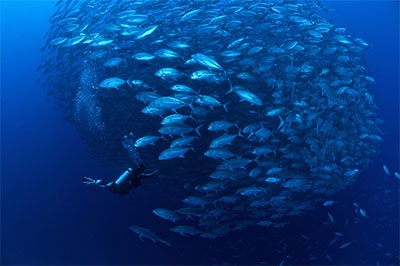
这个是我今天在群里看到的他们教学照片,个人认为这个非常不靠谱
比泰国某个潜水工厂还吓人
所以就要请教一下,naui初级潜水员教学的标准啊,有没有一个教练最多带几个学员的要求,有没有平静水域和开放水域至少要几次潜水,有没有至少多少个小时的教学时间要求。
因为我之前看到一份资料说要30小时教学和5小时开放水域教学,不知道是不是取消了?因为现在看naui的官网对初级scuba diver的教学没有具体说明了。有没有naui的教练解惑一下啊?
刚刚看了一下,@K-L老先生好像是naui的教练?能不能向他请教一下
没人知道这个标准吗?还是现在naui就没有标准?
问了的,国内理论的教练和国外的教练不是一个人,所以国内的教练不肯说国外怎么教学,估计他也不清楚。国外的教练现在完全不认识,而且国外的教练是用英语教学。
现在都好多了,先在国内上了理论课,至少是中文教学,听得懂,有问题也可以问教练。据说刚开始是直接去国外直接英文教学,理论课英文差的就听不懂了。所以他们这个也是在不断改进。
因为上述的情况,所以至今不知道naui应该是怎样的教学标准。只是问了同学,说是一次泳池教学四次开放水域教学。
据说naui也是有最低标准,教练可以根据学员情况增加教学,但是不能低于教学标准。
虽然说报的价格相对便宜,可是也不是不花钱,也想弄清楚这个标准,起码心里有数。因为一直搞不清楚这个标准,所以就上磨房潜水论坛来问了。没想到至今也没有搞清楚这个标准,实在是尴尬。
但是无论如何,这个naui的标准应该是有的清楚的,而且可以公布的吧?了解一下这个应该也是可以的嘛?应该不会造成什么影响吧?
貌似3k包机酒加教学,比单考一个o的学费都便宜,认真看书,谨慎实践,拿牌后多fd,慢慢补上,单看鱼的话,技能应该是够的,对自己有充分认识,并有游泳底子,我觉得挺合适的,至于什么几带几,大班小班什么的,我觉得就是个噱头,小班大班成果在于你本身,潜水是一个累积的过程,任何号称一考完证就是浪里白条的一律是耍流氓。至于各种培训体系,完全无必要担心,在休闲领域万变不离其宗,各体系来去都是那点事,基础要求都一样,学完记得发表下过程与心得,目前就看过一个参与学习的人发的心得,评价还是很正向的,不好评价都是已经有牌的人评论,你学完的心得更有指路意义。
这是别人的攻略,请参考 http://www.mafengwo.cn/i/7004279.html
我上个月刚去过一次美娜多,客串了一把naui的教练,确实是大班教学,一带8甚至更多,不过助手配置的还好,另外教学只有一本课本没有视频,相对padi而言,侧重实际操作轻理论。
教的内容没有padi那么全
个人意见,仅供参考
如果如楼主说的理论和笔试在国内完成,那么去到美娜多,侧重实际操作也是情有可原吧?毕竟都完成了理论课了,个人以为,不能和全部国外考牌相比,也无法用不同系统的标准来去作对比。
如果以PADI的标准 一个教练是1带8极限 每1个持证DM助教(注意是持证DM 不是DMT)可以增加2名学员
也就是还是1对8 不是1对4
另外DM助教没有教学资格 只有陪练和指导辅助资格
教学以及是否这个技巧PASS 需要教练来完成教授以及评估
高品质的课程1对3, 4是极限
3年内的新教练 能1对2也就不错了 1对3 4常常也是各种莫名其妙
就是20年的老教练 其实也很难完全保证1对6的以上情况的教学质量
请教一下什么叫做客串NAUI教练?
我上个月刚去过一次美娜多,客串了一把naui的教练,确实是大班教学,一带8甚至更多,不过助手配置的还好,另外教学只有一本课本没有视频,相对padi而言,侧重实际操作轻理论。
教的内容没有padi那么全
个人意见,仅供参考
其实我觉得吧
这个就和所谓的客户层次一样
较高要求的客户就不要去了
绝对让你失望 没有什么精细可言
而预算比较紧 无所谓细节质量的 可以
不过这句话可能有点得罪人 但是我还是得说
可想而知在水下会是个什么状况 明显是自己对自己的生命不负责
特别同意
我朋友ow都直接要求1对1 或者1对2
不缺钱的肯定图个舒服放心
谁他妈上课的时候骂我我能杀了他
好教练不靠骂人教学 你见过特级教师靠骂人来教学么
Hello Eddie,
Here is our Standards and Policies for the NAUI Scuba Diver Course
Scuba Diver
OVERVIEW AND QUALIFICATIONS
Scuba Diver is the NAUI entry-level scuba certification course. It provides the fundamental knowledge
and skills to scuba dive.
Upon successful completion of this course, graduates are considered competent to engage in open water
diving activities without supervision, provided the diving activities and the areas dived approximate those
of training.
WHO MAY CONDUCT
• Any active-status NAUI Instructor using NAUI support materials.
PREREQUISITES
• Age. Minimum is 15 years by the water phase of the course. (Junior certification for ages 10-14 years
is allowed. See “Policies Applying to All Courses: Age, Junior Certification.”)
• Certification/Experience/Knowledge. There is no certification required to enter this course. Students
who hold credentials from the NAUI Passport Diver Program may, at the discretion of the instructor, be
awarded credit for skills and knowledge acquired.
POLICIES
• Ratios. Standard ratios apply. (See “Policies Applying to All Courses: Assistants and Ratios.”)
• Daily Hours. No more than eight hours of training shall be conducted during any one day.
• Academics (estimated hours). 14 hours.
• Practical Application.
o MINIMUM REQUIRED HOURS.
– 17 hours including at least 10 water hours.
o MINIMUM REQUIRED DIVES.
– The minimum number of open water dives is four.
o LIMITATIONS.
– No more than three scuba dives shall be made on a single day during the course.
– Dives may be interspersed between “required” dives. These dives are subject to the same
conditions listed in these standards for required dives. Dive participants shall be supervised as
appropriate to their progress in training and as listed under “Escorting and Touring.”
– Following satisfactory completion of all dives required for certification, dives for the purpose
of expanding the qualified diver’s experience must at least be overseen. (See definition
“Overseeing” in “Glossary.”)
– All open water training must take place during daylight hours.
– If a third dive on a single day is planned the following conditions must be met:
à No other confined water training shall be conducted on a day when more than two open
water dives are made.
à At a minimum, the following factors shall be considered: student’s physical and mental
stamina, motivation, readiness to learn and be evaluated, residual nitrogen levels,
hydration levels, as well as environmental conditions, dive planning, i.e., surface intervals,
flying or ascending to altitude after diving.
à No out-of-air ascent training exercises shall be conducted on the third dive in a single day
and on any third dive in a single day the depth shall not exceed 40 feet (12 m).
DEPTH.
– The maximum depth for any open water dive during this course is 60 feet (18 m).
o ESCORTING AND TOURING.
– Qualified assistants may escort students during surface excursions and exits, ascents and
descents and may temporarily attend to remaining students while the instructor conducts a
skill with other students. During the third or subsequent open water dives, qualified assistants
can each escort a pair of students on a tour. Before any student is allowed to tour with a
qualified assistant, the instructor must have presented and evaluated all of the following
academic topics and diving skills
à Academic Topics: Emphasis is on risk minimization, equipment, and skills required to
properly and effectively scuba dive with a buddy. Students are to be informed of the
benefits of the program and shown correct usage of the equipment and materials utilized.
Academics, which are first presented in the classroom, may be repeated at the water site
and deal with immediate concerns rather than theory.
à Students are to be able to:
– Explain why equalization is important;
– Demonstrate mask pressure equalization and one method of equalizing middle ear
pressure;
– Explain proper scuba breathing and its importance;
– Explain the effects of pressure on air consumption;
– Explain the concept of buoyancy and the methods for controlling it, including
weights, breathing, and BC use;
– List the safety rules for diving in open water (this list, provided to the student by the
instructor, will be appropriate for the locality);
– Explain local underwater environmental, plant, or animal hazards and concerns and
proper problem prevention regarding them.
à Scuba Diving Skills:
– Don and adjust gear.
– In confined water demonstrate the ability to:
• Efficiently propel oneself at the surface and underwater.
• Equalize pressure in body and equipment spaces during descent.
• Comfortably breathe from scuba underwater.
• Comfortably breathe from scuba underwater without a face mask.
• Regain the primary regulator second stage from behind the shoulder, replace,
clear, and resume breathing.
• Comfortably remove, replace, and clear a mask.
• Underwater inflate and deflate the BC using power inflator and orally.
• Establish neutral buoyancy and hover without support or significant movement.
• Give, recognize, and respond appropriately to common underwater
communications.
• In a stationary position, share air in a controlled manner with another diver; be
both the donor of air and the receiver of air.
• Monitor air supply and communicate amount remaining upon request.
• Surface normally breathing from scuba.
• Establish surface flotation with BC using power inflator and orally.
In open water demonstrate the ability to:
• Comfortably perform entries and exits as appropriate for the circumstances.
• Effectively dive with a buddy in a directly supervised group.
• Identify significant plant and animal life encountered.
• Equipment. See “Policies Applying to All Courses: Equipment.”
• Materials. See “Policies Applying to All Courses: Forms, Records and Reports.”
• Course Results. See “Policies Applying to All Courses: Certification Requirements.”
REQUIREMENTS – ACADEMIC
• Applied Sciences. Physics, physiology and medical aspects as they relate to a diver’s performance and
safety in the water. Emphasis is to be placed on physical fitness, diving hazards, personal limitation,
and the behavior needed to minimize the risks of diving. Material is to be presented in terms of
qualitative, practical application. Topics include: gases, pressure, volume, temperature, density,
buoyancy, vision, and acoustics. Also to be included are the definition, cause, prevention, symptoms,
and first aid for nitrogen narcosis, shallow water blackout, squeezes, overexertion, overexposure,
decompression illness, i.e., decompression sickness, and air embolism, and related injuries. Repetitive
dive tables are to be covered to the extent required for students to be able to plan repetitive dives not
requiring staged decompression. It is acceptable for students to be instructed in the use of their
personally owned dive computers in lieu of using dive tables for dive planning.
• Diving Equipment. Purpose, features, types and uses of recreational skin and scuba equipment. The
student is to be able to select, use, and care for mask, snorkel, fins, BC with low pressure inflator,
weight system and weights, scuba cylinder, regulator with submersible pressure gauge and alternate
air source, depth gauge, timing device, dive computer, protective suit, knife, compass, surface marker
buoys (delayed or permanent), and any other basic equipment dictated by the local diving conditions.
• Diving Safety. Aspects that impact upon a diver’s safety. Topics are to include emergency procedures,
rescue and first aid as applied to diving, underwater communications, basic underwater navigation,
dive planning, and safety measures. Shock, wounds, envenomation, and near-drowning are to be
covered under first aid. Rescue is to address problem prevention and recognition, panic, self-rescue
assists and transports, retrievals from depth, and rescues in open water.
• Diving Environment. Physical and biological aspects of the environment where open water training
is conducted. The student shall be trained to recognize potential hazards before entering the water.
The instructor is to nurture student awareness of the importance of conservation and the kinds of
both negative and positive impact divers can have on the environment. Game regulations,
conservation principles, and other pertinent laws are to be addressed where appropriate.
• Diving Activities. The how, who, when, where, what, and why of diving. Emphasis shall be placed
upon continued education through NAUI training courses. Information on the availability of dive
clubs, boats, stores, dive locations, books and periodicals, and a limited introduction to specific diving
activities shall be given.
• Continuing Education. Limitations as new divers and the importance of additional training. An
awareness of personal ability shall be emphasized. Specific information on continuing education
courses, workshops, and conferences is to be provided. The importance of logbook use shall be
emphasized. Students are to appreciate the need to reevaluate their physical condition and diving
competence before resuming open water diving after periods of inactivity or prior to embarking on
dives beyond their current level of training. Use of the NAUI Refresher Scuba Experience or more
advanced level NAUI training is to be recommended in such cases.
REQUIREMENTS – SKILLS
• Dry Suit Use. If dry suits are to be used, the student must complete the following skills in confined
water before participating in open water activities:
o Demonstrate the use of suit controls.
o Recover from an inverted position while buoyant.
o Recover from simulated stuck suit valves.
o Demonstrate a procedure to compensate for a jettisoned weight system.
o Select a compatible buoyancy compensator.
o Maintain a minimum volume of air in the suit to prevent suit squeeze.
• Swimming Skills (confined or open water)- no equipment.
o Demonstrate novice level swim stroke proficiency in any of the following strokes: crawl, side,
breast, elementary back, or back stroke. Classic stroke combinations are not necessary to meet
this requirement as long as forward progress is achieved, e.g. no particular kick or arm action is
necessarily required and a lack of either is also acceptable. Students shall complete at least 15
continuous stroke cycles while being evaluated by an instructor. A stroke cycle is considered to be
either arm or leg action or a combination thereof resulting in forward movement.
o Survival swim for 10 minutes.
o Swim underwater 50 feet (15 m) on one breath with no push-off or dive. The use of weights is
permitted for students having difficulty remaining submerged. The use of a mask is permitted for
students wearing contact lenses.
• Skin Diving (confined or open water) minimally equipped with mask, fins and snorkel.
o Swim 450 yards (412 m) nonstop, breathing from snorkel.
o Bring another diver simulating unconsciousness to the surface from a depth of about 10 feet (3 m)
of water.
o Using proper techniques perform water entries and exits, surface dives, surface swimming,
clearing the snorkel, ditching the weight system, buoyancy control, underwater swimming and
surfacing.
• Scuba Diving (confined and open water). Skills marked with an asterisk “*” must be introduced in
confined water. Depth requirements in excess of 8 feet (2.4 m) do not apply in confined water.
o PRE- AND POST-DIVE SKILLS.
– *Select, check, assemble, adjust and don equipment; perform pre-dive gear check for self and
buddy; defog masks; after diving, doff, rinse, and care for gear.
– *Perform surface buoyancy/weighting check and make adjustments as needed to hover at
diving depth.
– Correctly give and recognize surface communications for divers.
– Orally inflate and deflate own and buddy’s BC.
– *At the surface, remove and replace (in turn): mask, fins, and scuba unit.
– *With face submerged, breathe through snorkel while resting and swimming.
– With face submerged, breathe through water in the snorkel without choking.
– Release a simulated muscle cramp from self and buddy.
– If appropriate for the area, enter and exit the water with a float and/or, “Diver Down” flag and
line; use to identify the dive area while diving.
– *Demonstrate proper use of the selected weight system. As appropriate, on the surface and
underwater, skills include: removal and replacement, adjustment, and positioning.
Minimally, all weight systems must be removed on the surface at least one time, by the
student.
– Deploy and retrieve a surface marker buoy.
DESCENT/ASCENT SKILLS.
– *Control pressure in air spaces for comfortable, controlled descents and ascents.
– *Descend feet first with a minimum of hand movement, i.e., sculling or treading, using breath
control or BC to control rate of descent.
– At the end of a dive, ascend at a controlled steady rate of 30 feet (9 m) or less per minute and
hover at a depth of approximately 15 feet (4.6 m) for three minutes.
o UNDERWATER SKILLS.
– Give, recognize, and respond appropriately to common underwater communications.
– *Mask clearing, including removal and replacement. (In cold water environments when mitts
and hood seals are used, confined water removal and replacement is sufficient.)
– *Remove, replace, and clear a regulator.
– *Regain primary regulator from behind the shoulder, replace, and clear.
– *Hover without support or significant movement.
– *If wearing a standard buckle type weight belt and submerged in a prone position at the
bottom or while hovering, adjust the position of the weight system so that the ballast is evenly
distributed.
– *If wearing a weight-integrated weight system, and submerged in a prone position at the
bottom or while hovering, remove and replace at least one weight pocket, if permitted by the
weight system. If necessary, assistance is allowed to replace the weight pocket.
– Use the buddy system for scuba diving, remaining within 10 feet (3 m), or less if required by
conditions, of buddy.
– Monitor air supply and communicate amount remaining upon request, and manage air
supply so as to surface with a pre-planned minimum amount of air.
– Using environmental navigation aids and a compass, travel underwater to a designated
location or in a given direction for a set period of time.
– Use an underwater compass to set a bearing: follow the bearing and return on a reciprocal
course to the approximate starting location.
• Planning.
o Measure, record, and calculate individual air consumption (as surface air consumption rate)
using a submersible pressure gauge, depth gauge and timing device.
o Plan and make a no-required-stop dive to a depth between 40 and 60 feet (12 and 18 m). Planning
is to consider at a minimum: adequate breathing gas supply for descent, time at depth, ascent,
precautionary stop and safety margin. If local dive areas, i.e. dive locations within a 50-mile
(80km) radius of the course facility, do not provide water depths in excess of 40 feet (12 m) or
there are other hazards that, in the instructor’s judgment, prevent the completion of a dive that
exceeds 40 feet (12 m) a simulated deeper water dive to a lesser depth is acceptable as long as it
still meets the definition of a scuba dive as stated in the “Glossary.”
o Upon completion of a dive, use the repetitive dive table to properly calculate a planned norequired-
stop repetitive dive projected to begin after at least a one-hour surface interval. It is
acceptable for students to be instructed in the use of their personally owned dive computers in
lieu of using dive tables for dive planning. (The actual dive need not be conducted.)
• Environmental.
o Dive using skills that have a minimal impact on the environment and promote conservation.
o Recognize and identify (by common name) samples of plant and animal life typically seen.
Emergency/Rescue/Problem Solving.
o Transport for a distance of at least 50 yards (46 m) a buddy who is simulating exhaustion. Eye-toeye
or voice contact between rescuer and diver must be maintained.
o *In a stationary position in confined water and at a minimum depth of 15 feet (4.6 m) in open
water, share air in a controlled manner with another diver, be both the donor of air and receiver
of air.
o *Perform a relaxed, controlled emergency swimming ascent in confined water and from a
minimum depth of 15 feet (4.6 m) in open water. (See supplemental “Details of Selected Skills.”)
o *Share air as both a donor and a receiver from an octopus or alternate breathing source (not
buddy breathing) during ascents in confined water and from a minimum depth of 15 feet (4.6 m)
to the surface in open water.
o *Bring a diver simulating unconsciousness to the surface from a depth of approximately 10 feet
(3 m), remove victim’s weight system, mask and snorkel; simulate in-water rescue breathing.
REQUIREMENTS – EXAMS
See “Policies Applying to All Courses: Evaluation and Documentation.”
If you have any other questions, just ask.
Thanks!
NAUI的Training Manager回复的,不得不说。。。回信好慢。。
感谢,好长……还是英语……慢慢看
来来来,招个翻译家。
最低要求:理论十四小时,操作练习十七小时(包括10小时水下操作练习) 。
十个小时可以理解为至少十瓶气吗?
最低四次开放水域潜水。
我6月25号出发去FD,美娜多性价比不错的
我只是觉得一分钱一分货
话也不是这么说,比如我现在因为工作原因改期了,别人因为暑期旺季原因涨价了一千七,总价差不多9000了, 价格贵了,东西还是那个东西,服务还是那个服务。也不能说涨价了他们服务就突然提升一大截。:smile:
比如据说追浪或者其他中文店,价格就是要比非中文的贵一截。因为中文教练少。
所以决定价格的更多还是供求关系。服务质量,促销等等因素可能只是次要一些。