
憋了几个月,终于可以“扑通!”“扑通!”
时间:4月26日 本周日
地点:南汇滴水湖,风景不用多介绍了,海边的大湖,吹着持续稳定的海风——帆板运动的氧气。
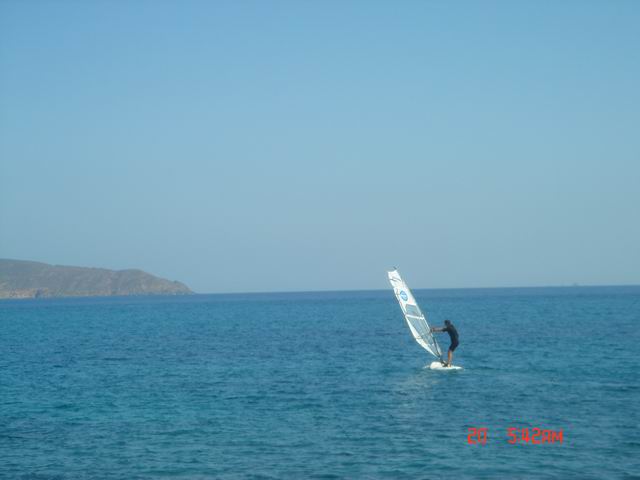
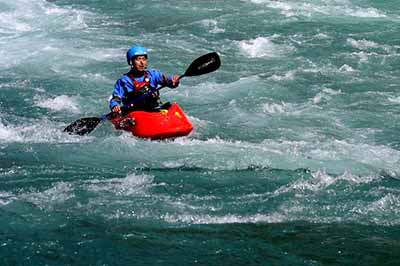
活动:帆板、帆船、独木舟。器材可以自带,也可以用当地一个俱乐部的,不收费用,请爱惜使用,损坏照价赔偿,俱乐部有浴室,热水淋浴可能要付费。
人数:4人,其中一司机(优先),会开手排车。
装备:快干衣裤或冲浪服,潜水服更佳,防晒霜,并准备全套备换衣物及鞋袜。
出发时间与地点:司机8点左右莘庄附近,其他人可9点在2号线张江高科站,2点左右我需返回,送回张江;想继续玩的自愿,自己回城
参加人员须水性娴熟,在水中任何时候必须穿好救生衣,注意安全,不做危险动作。
午饭:自带或自付
费用:无。
想去的在这跟贴。
最终确认:
帆板、帆船、独木舟,可免费体验半小时,再玩要收费。热水澡免费。剩余时间,可以带辆自行车去骑骑,车可放在皮卡上。皮卡张江出发时间上午十点,返回张江时间下午两点。午饭自理,俱乐部附近无小店,有客饭,大概十块/客。
以下同学,确认去者请跟贴,抱歉不再接受新报名。
realicy
加一个
观达
玩转地球blue
楊兄弟
可乐汤
艨艟
格式:火力/张江上车/自行车一辆。
火力,你。。。。。。!!!怎么变成周日了。

纠结啊纠结。
偶要去杏梅尖
口水口水
二楼的高人,俺的计划里一直就是26号,没变过。你干脆骑过来算了,就当骑累了,下湖洗个澡
火总你开皮卡哇?
开的话,我就早点骑车到滴水湖,然后搭车回来。
OMG,完美的一天。
没问题,给你个VIP座位。
这个需要什么基础吗?
会有人教吗?
帆船可以找个教练带你体验, 正式教的话得报培训班.
贴点介绍吧, 这是维基百科对sailing的定义。
Sailing is the art of controlling a boat with large pieces of canvas cloth called sails. By changing the rigging, rudder, and dagger or centre board, a sailor manages the force of the wind on the sails in order to change the direction and speed of a boat. Mastery of the skill requires experience in varying wind and sea conditions, as well as knowledge concerning sailboats.
第一句话就让人激动吧?
看来,首先需要过了英语关啊。上面那个大段大段地,看了就让人头晕。

前面的历史、文化什么的我就不转了,这是关于驾驶技术的部分, 这一段是我见过的最简明精辟的帆船驾驶入门理论。哪位洋文好的同学翻译一下更好。有兴趣的同学可以先看看。
Points of sail
Further information: Points of sail
The points of sail. A. In Irons (into the wind) B. Close Hauled C. Beam Reach D. Broad Reach E. RunningThe points of sail are the most important parts of sail theory to remember. The wind, irons, or no go zone, is about 45° either side of the true wind, for a racing hull and sail plan optimized for upwind work. More commonly and on cruising sailplans, the best angle achievable upwind is 50° to 55° to the true wind. A boat cannot sail directly into the wind; attempting to do so is called luffing. There are 5 main points of sail. In order from the edge of the no go zone to directly downwind they are:
close haul (22° to the apparent wind)
close reach (half way between close hauled and a beam reach)
beam reach (90° to the apparent wind)
broad reach (22.5° away from directly downwind sailing)
running (directly downwind)
The sail trim (and, on smaller boats, centre board/dagger board position) on a boat is relative to the point of sail one is on: on a beam reach sails are half way out, on a run sails are all the way out, and close hauled sails are pulled in very tightly. A large proportion of the skill of sailing is in trimming the sails correctly for direction and strength of the wind.
[edit] Beating
Using a series of close-hauled legs to beat a course upwind.A basic rule of sailing is that it is not possible to sail directly into the wind, simply because the angle of attack of the wind on the sail would be zero. This is easily understood by looking at a flag flapping in the wind (zero angle of attack) and generating no thrust. Generally speaking, a modern boat can sail 45 degrees off the wind. When a boat is sailing this close to the wind, it is close-hauled or beating (beating to weather).
Because a boat cannot sail directly into the wind one can only get to an upwind destination by sailing close-hauled with the wind coming from one side, then tacking (turning the boat through the eye of the wind) and sailing with the wind coming from the other side. By this method of zig-zagging into the wind it is possible to reach any destination directly upwind. For a yacht beating upwind to a mark at a distance upwind of one mile, it will cover a distance through the water of over 1.4 miles, if it can tack through an angle of 90 degrees. An old adage describes beating as sailing for twice[7] the distance at half the speed and three times the discomfort.
How closely a boat can sail into the wind depends on the boat's design, sail shape and trim, the sea state, and the wind speed.
Typical angles to the wind are
about 35° for modern racing yachts which have been optimized for upwind performance (like America's Cup yachts)
about 42 to 45° for modern cruiser-racer yachts (fast cruising yachts)
about 50 to 60° for cruisers with an emphasis on interior space, ease of handling and often low draught rather than sailing performance, and for boats carrying two or more masts (since the forward sails adversely affect the aft sails when sailing upwind)
close to 90° for square riggers and similar vessels due to the sail shape which is very ineffective when sailing upwind
[edit] Reaching
When the boat is traveling approximately perpendicular to the wind, this is called reaching. A 'beam' reach is with the wind precisely at right angles to the boat, while a 'close' reach is halfway between beating and a beam reach, and a 'broad' reach is a little bit away from the wind.
For most modern sailboats, that is boats with triangular sails, reaching is the fastest way to travel. The direction of the wind is ideal for reaching because it will maximize the lift generated on the sails in the forward direction of the boat, giving the best boat speed. Also when reaching, the boat can be steered exactly in the direction that is most desirable, and the sails can be trimmed for that direction.
Reaching however may put the boat on a parallel course with the waves. When the waves are steep, it may be necessary to sail closer to the wind to avoid waves directly on the beam.
[edit] Running
A Thistle running downwind with a spinnaker.Sailing the boat within roughly 30 degrees either side of dead downwind is called a run. This is the easiest point of sail in terms of comfort, unless in a small dinghy, where cramp can set in. It can be, however, also the most dangerous since deathrolls leading to turtles are very common in high winds. When sailing upwind, it's easy to stop the boat by heading into the wind; a sailor has no such easy out when running. Severe rolling is more likely as there is less rolling resistance provided by the sails, which are eased out. And loss of attention by the helmsman could lead the boat to jibe accidentally, causing injury to the boat or crew. (A preventer can be rigged to prevent damage from an accidental jibe.) Alternately, if there is a sudden increase in wind strength, the boat can round up very suddenly and heel excessively, often leading to a capsize in smaller boats. This is called broaching.
[edit] Basic sailing techniques
Sailing in front of Helsinki, Finland. 8mR Sagitta (Camper & Nicholson 1929), a true sailboat with no motor, lowers its mainsail after a training session before returning to its mooring with the foresail only.
[edit] Trim
An important aspect of sailing is keeping the boat in "trim". To achieve this a useful mnemonic (memory aid) is the phrase:
Can This Boat Sail Correctly?
This helps the crew to remember these essential points;
Course made good - The turning or steering of the boat vessel using the wheel or tiller to the desired course or buoy. See differentpoints of sail. This may be a definite bearing (e.g. steer 270 degrees), or towards a landmark, or at a desired angle to the apparent wind direction.
Trim - This is the fore and aft balance of the boat. The aim is to adjust the moveable ballast (the crew!) forwards or backwards to achieve an 'even keel'. On an upwind course in a small boat, the crew typically sit forward to reduce drag.When 'running',it is more efficient for the crew to sit to the rear of the boat. The position of the crew matters less as the size (and weight) of the boat increases.
Balance - This is the port and starboard balance. The aim, once again is to adjust weight 'windward' or 'leeward' to prevent excessive heeling. The boat moves at a faster velocity if it is flat to the water.
Sail trim - Trimming sails is a large topic. Simply put however, a sail should be pulled in until it fills with wind, but no further than the point where the front edge of the sail (the luff) is exactly in line with the wind. Let it out until it starts to flap, and then pull it in until it stops.
Centreboard (Daggerboard) - If a moveable centreboard is fitted, then it should be lowered when sailing "close to the wind" but can be raised up on downwind courses to reduce drag. The centreboard prevents lateral motion and allows the boat to sail upwind. A boat with no centreboard will instead have a permanent keel, some other form of underwater foil, or even the hull itself which serves the same purpose. With a daggerboard, on a close haul the daggerboard should be fully down and while running over half way up.
Together, these points are known as 'The Five Essentials' and constitute the central aspects of sailing.
[edit] Reducing sail
An important safety aspect of sailing is to adjust the amount of sail to suit the wind conditions. As the wind speed increases the crew should progressively reduce the amount of sail. On a small boat with only jib and mainsail this is done by furling the jib and by partially lowering the mainsail, a process called 'reefing the main'.
Reefing means reducing the area of a sail without actually changing it for a smaller sail. Ideally reefing does not only result in a reduced sail area but also in a lower center of effort from the sails, reducing the heeling moment and keeping the boat more upright.
There are three common methods of reefing the mainsail:
Slab reefing, which involves lowering the sail by about one-quarter to one-third of its luff length and tightening the lower part of the sail using an outhaul or a pre-loaded reef line through a cringle at the new clew, and hook through a cringle at the new tack.
In-mast (or on-mast) roller-reefing. This method rolls the sail up around a vertical foil either inside a slot in the mast, or affixed to the outside of the mast. It requires a mainsail with either no battens, or newly-developed vertical battens.
In-boom roller-reefing, with a horizontal foil inside the boom. This method allows for standard- or full-length horizontal battens.
Mainsail furling systems have become increasingly popular on cruising yachts as they can be operated shorthanded and from the cockpit in most cases, however, the sail can become jammed in the mast or boom slot if not operated correctly. Mainsail furling is almost never used while racing because it results in a less efficient sail profile. The classical slab-reefing method is the most widely used. Mainsail furling has an additional disadvantage in that its complicated gear may somewhat increase weight aloft. However, as the size of the boat increases, the benefits of mainsail roller furling increase dramatically.
An old saying goes, "The first time you think of reducing sail you should,"[citation needed] and correspondingly, "When you think you are ready to take out a reef, have a cup of tea instead."[citation needed]
[edit] Sail trimming
A Contender dinghy on a reach.Sail trimming is a large subject and is a matter of debate.
The most basic control of the sail consists of setting its angle relative to the wind. The control line which accomplishes this is called a "sheet." If the sheet is too loose the sail will flap in the wind - which is called "luffing." Optimum sail angle can be approximated by pulling the sheet in just so far as to make the luffing stop. Finer controls adjust the overall shape of the sail.
Two or more sails are frequently combined to maximize the smooth flow of air. The sails are adjusted to create a smooth laminar flow over the sail surfaces. This is called the "slot effect". The combined sails fit into an imaginary aerofoil outline, so that the most forward sails are more in line with the wind, whereas the more aft sails are more in line with the course followed. The combined efficiency of this sail plan is greater than the sum of each sail used in isolation.
More detailed aspects include specific control of the sail's shape, e.g.:
reefing, or reducing the sail area in stronger wind
altering sail shape to make it flatter in high winds
raking the mast when going upwind (to tilt the sail towards the rear, this being more stable)
providing sail twist to account for wind speed differential and to spill excess wind in gusty conditions
gibbing or lowering a sail
[edit] Hull trim
Hull trim is the adjustment of a boat's loading so as to change its fore-and-aft attitude in the water. In small boats, it is done by positioning the crew. In larger boats the weight of a person has less effect on the hull trim, but it can be adjusted by shifting gear, fuel, water, or supplies. Different hull trim efforts are required for different kinds of boats and different conditions. Here are just a few examples: In a lightweight racing dinghy like a Thistle, the hull should be kept level, on its designed water line for best performance in all conditions. In many small boats, weight too far aft can cause drag by submerging the transom, especially in light to moderate winds. Weight too far forward can cause the bow to dig into the waves. In heavy winds, a boat with its bow too low may capsize by pitching forward over its bow (pitch-pole) or dive under the waves (submarine). On a run in heavy winds, the forces on the sails tend to drive a boat's bow down, so the crew weight is moved far aft.
[edit] Heeling
A ship or boat leaning over to one side under wind pressure or the action of waves, is said to 'heel'. As a sailing boat heels over beyond a certain angle, it begins to sail less efficiently. Several forces can counteract this movement.
Boats heeling in front of Britannia Bridge in a round-Anglesey race 1998The buoyancy of that part of the hull which is being submerged tends to bring the boat upright.
Raising the centreboard can paradoxically reduce heeling, because it increases leeway.
A weighted keel, which can in larger boats be canted from side to side, provides additional force to right the boat.
The crew may move onto the high (upwind) side of the boat, called hiking, changing the centre of gravity significantly in a small boat. They can trapeze if the boat is designed for this (see Dinghy sailing).
The underwater shape of the hull relative to the sails can be designed to make the boat tend to turn upwind when it heels excessively: this reduces the force on the sails, and allows the boat to right itself. This is known as rounding up.
The boat can be turned upwind to produce the same effect.
Wind can be spilled from the sails by 'sheeting out', i.e. loosening the sail.
The sail shape can be altered to reduce its efficiency, e.g. tightening the downhaul (see list of nautical terms)
The sail area can be reduced. This manoeuvre is known as Reefing.
Lastly, as the boat rolls farther over, wind spills from the top of the sail and the angle of attack lessens the wind's force.
Most of the above effects can be used to right a heeling boat and to keep the boat sailing efficiently: if however the boat heels beyond a certain point of stability, it can capsize. A boat is capsized when the tip of the mast is in the water. Yachts are traditionally divided into non-capsizable (which means that they have a heavy keel which in normal weather should stabilize the vessel) and non-drowning (which usually means that the vessel has a centerboard and even in normal circumstances can be capsized, but will not sink).
[edit] Sailing hulls and hull shapes
Further information: Hull (watercraft)
Musto Performance SkiffSailing boats with one hull are "monohulls", those with two are "catamarans", those with three are "trimarans". A boat is turned by a rudder, which itself is controlled by a tiller or a wheel, while at the same time adjusting the sheeting angle of the sails. Smaller sailing boats often have a stabilising, raisable, underwater fin called a centreboard (or daggerboard); larger sailing boats have a fixed (or sometimes canting) keel. As a general rule, the former are called dinghies, the latter keelboats. However, up until the adoption of the Racing Rules of Sailing, any vessel racing under sail was considered a yacht, be it a multi-masted ship-rigged vessel (such as a sailing frigate), a sailboard (more commonly referred to as a windsurfer) or remote-controlled boat, or anything in between. (see Dinghy sailing)
Multihulls use flotation and/or weight positioned away from the centre line of the sailboat to counter the force of the wind. This is in contrast to heavy ballast that can account for up to 90% (in extreme cases like AC boats) of the weight of a monohull sailboat. In the case of a standard catamaran there are two similarly sized and shaped slender hulls connected by beams, which are sometimes overlaid by a deck superstructure. Another catamaran variation is the proa. In the case of trimarans, which have an unballasted centre hull similar to a monohull, two relatively smaller amas are situated parallel to the centre hull to resist the sideways force of the wind. The advantage of multihulled sailboats is that they do not suffer the performance penalty of having to carry heavy ballast, and their relatively lesser draft reduces the amount of drag, caused by friction and inertia, when moving through the water.
等了半天,终于有动静了。报名一个,想玩帆板。司机,会开手排,可骑车到张江高科搭车或自驾从浦东金桥出发。
这季节下水是不是冷啊
帆船,只要不翻船掉到水里,就不会冷。通常情况,风不是太大,不过于追求速度,都不会翻船。万一掉了,上岸马上洗个热水澡,换上干衣服,就没事了。我一个月前在淀山湖比赛,风大多变,压舷过度,连续翻了三次,全身湿透,才退赛。不是因为冷,而是因为要在水里把船翻过来,体力耗尽。其实就算你湿了,只要一直在动,也不会冷,而且那次我穿的还是一般的快干衣。上岸后还先把船洗干净,因为湖浅,桅杆都插到水里,沾了泥,一定要冲洗干净。然后才去洗澡。还好后来也没事。
帆板一定会湿透的,必须穿防寒服(就是潜水服,效果很好),一直在动的话也不会冷的。我去年去滴水湖也是11月,天气应该比现在还冷,跑起来还行,玩了一个多小时才上来。
皮划艇裤子肯定会湿,包括PP,是桨带起来的水,不是漏水,所以换洗衣服要带好。
报名,想尝试一下水上运动 会游泳,会开手排,张江高科搭车。
报名原因同观达
体验过后再决定看看要不要翻译
没有装备,水性一般,领导不嫌弃就张江高科搭车。
看出点门道了
火力每周都出来用一个又一个有劲的活动勾引大家
当大家被活动吸引的欲仙欲死时
鸽子就会飞掉
而无数正当高潮的人开始疯狂填坑
老版主用心的,新版主要请吃饭。
这个咋个报名哇?
一定要开皮卡?是不是要运很多东西哇?
快一年没开手排了火力的皮卡可以给我耍耍哇?
预祝火帅 玩的开心舒爽
。。。还是很心动,欢迎女生报名吗?还是确实有难度,就劝退新人啦?
无装备,水性尚可,擅长手排。
这次到底是帆船还是帆板?
那里是个新开的俱乐部,帆船、帆板和独木舟都有。老板想聚拢人气,故有这个免费体验的机会。
初学者建议先玩玩帆船和独木舟,等天气热了再玩帆板不迟。
刚刚跟老板电话确定,帆船免费时间只有半小时,其余时间可以玩玩皮划艇,或者自己带辆自行车去骑,车可以放在皮卡上。
上海境内可以玩帆船和帆板的有三个地方:淀山湖、滴水湖、金山城市沙滩。每个地方都有一个或多个俱乐部,价格和地理条件各有不同,我也在研究。有兴趣的同学可以一同比较一下,最终选择一家报名。
机动艇可以加入吗?
玩这玩意不出汗,还烧油,一起玩帆板多好。
羡慕。。不过滴水湖能随便帆板么
这个问题我也很郁闷!我们这次是通过当地的俱乐部玩,我问过他们可不可以自己带装备过来,回答说不行,因为他们是属于滴水湖管理公司的,这个湖是他们挖出来的,等等。连皮划艇都不行。
不过,你真要下,不知道他们能出动什么,或依据什么来制止。
10点开始活动?天气好去看看
UP,等看你们扑通的结果,,,
火总来接我哇?
最终确认:
帆板、帆船、独木舟,可以免费体验半小时,再玩要收费。热水澡免费。剩余时间,可以带辆自行车去骑骑,车可放在皮卡上。皮卡张江出发时间上午十点,返回张江时间下午两点。午饭自理,俱乐部附近无小店,有客饭,大概十块/客。
以下同学,确认去者请跟贴,抱歉不再接受新报名。
realicy
加一个
观达
玩转地球blue
楊兄弟
可乐汤
艨艟
格式:火力/莘庄上车/自行车一辆/2点返回。