
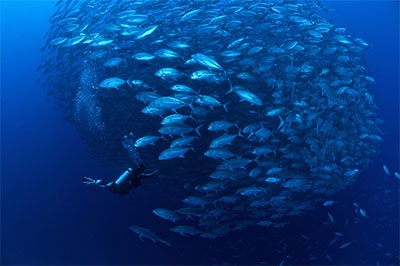
Watch the video below to experience first hand the trials and tribulations of this assignment and see 200 manta rays and half a dozen whale sharks feast on krill in the newly proclaimed Hanifaru marine protected area.
http://www.saveourseas.com/mantarays
200条manta和6条鲸鲨一起进食。。。。我已经去邮件给船公司了,看看10.19号的cruise还有没有仓位。。。。
打开了没有视频啊、、、、、
试一下这个视频的链接
http://vimeo.com/moogaloop.swf?clip_id=5605319&
已转帖给一帮早已订好十一去马尔代夫船宿的潜伴注意,谢谢楼主的消息。
my pleasure!
Hanifaru Bay,在Baa Atoll
还有一个视频在
http://www.maldivestourismupdate.com/2009/07/hanifaru-bay-maldives.html
更多的介绍在
http://www.divephotoguide.com/articles/hanifaru_bay_maldives_manta_madness
Hanifaru位于BAA Atoll,也不算新潜点了。只是麻袋的传统线路没有包括BAA环礁,所以知道的人比较少。
现在也有一些船专门在北部环礁船宿的,不过一般都要坐水上飞机从马累飞到BAA环礁上船,费用不菲。
嗯,不过我之前没有听说过。
这个是我4月份去马尔代夫的船公司给我的邮件里面的内容:
Dates
Hurry and sign up now! Space is limited and availability is going fast. The two diving cruises are scheduled for:
October 5 through 12
October 19 through 26
The diving cruise begins and terminates in Male, the Maldivian capital.
Price
This unique opportunity is priced to please, at just USD$1554 per week per diver.
10月份不是好季节,建议还是找春节期间吧。
嗯,所以为了确定,我发邮件给拍到那段视频的基金会了,问他们是几月份拍到的。 就是担心有很大偶然性,千里迢迢的过去了,什么都没有看到。。。。
这个点在North Male Atoll
8. Hanifaru
This is a long reef stretch surrounding a sandy bay. The top of the reef is about 3 to 5 meters deep while the bottom reaches 30 meters. This is a very good site for a drift dive as there is a mild current along the whole length of the reef. Divers drifting along can investigate the overhangs and the friendly school os Batfish which highlight this site. Towards the end of the dive we will reach some coral blocks where we sometimes see Green Turtles. During the season for Manta rays, gathering schools of Glassfish overpopulate these blocks while the Manta rays cruise in and out for cleaning.
1. Horubadhoo Thila
This dive site is a marine protected reef. The top of the Thila (a submerged mountain) is 12 to 16 meters deep and is inhabited by different coloured varieties of soft and hard corals. If conditions are optimal, you will see a vast scale of marine life from the tiniest of creatures to the huge Barracuda. There are large, rough blocks on either side of the Thila which sweep up the current allowing schools of Fusiliers to escape the hunting Jack fishes. During low season (May to November), Manta Rays come to the cleaning stations on the Thila and big clouds of Glassfish gather around this coral formation.
2. Dhigali Giri
The top of this huge reef begins at a depth of just 3 meters. There are some overhangs on the north-eastern corner. Many different couloured hard corals bloom on this reef, especially in the shallow area. The reef’s location protects it from the currents and a wide variety of fish life can be seen.
3. Anga Faru
This is one of the very unique spots where we are able to see the breeding grounds of Baa Atoll’s Grey reef sharks (seasonal).
The reef, a very long stretch, 3 meters deep at its top, slopes gently for some distance until it builds a number of bay-shaped formations. Divers descend on the slope and drift towards the formations. Halfway to the bottom the rising sand reveals a small Thila just a few meters off the main reef. We cross from the main reef to this Thila to approach the first bay which is the “Shark Nursery”. A permanent fixed rope on the ridge of the bay-shaped reef allows divers to hang in the current while watching the sharks. Depending on the season we may see a number of shark families, from the small babies to the big mammas, peacefully cruising around. Turtles and schools of Barracuda are also common here.
Although this nursery is not yet a nature reserve, we are doing our utmost to protect this unique place. We will not visit on a frequent basis and carefully monitor the possible impact our presence may have on this site.
4. Anga Thilas
This is a series of Thilas lying between Anga Faru and Dhigu Thila. The five rough blocks rising from the bottom of the atoll are covered with many different soft and hard corals. Divers drift in the mild current while hopping from one Thila to the next. Each Thila offers many overhangs and holes which are the perfect habitat for the variety of fish life, which occurs around these formations.
5. Dhigu Thila
Dhigu Thila is a very long, narrow reef which rises from the sea floor to the crest at 8 to 16 meters depth. Both sides of the Thila drop down like a wall and most of the overhangs are between 20 to 25 meters. On either the western or eastern end of the Thila, depending on the direction of the current, a fine selection of fish can be seen; Fusilier and Banner fish, Eagle Rays and Jack fishes. Drifting along the side of this long Thila is equally exciting as,during low season, schools of Glassfish come here and Manta rays cruise the top.
6. Dhonfanu
Dhonfanu is an oval shaped reef starting at a depth of 7 to 14 meters. One side of the Thila forms a beautiful swim-through beginning at 18 meters and ending around 25 meters. There is a canyon on the other side of the Thila between the main reef and a large block that stands slightly with astonishing corals and aquatic life. When the conditions are right, Grey reef sharks, Eagle rays, Barracudas and big schools of Jack fish can be seen.
7. Hanifaru Thila
This is one of the biggest Thilas in this area and is accompanied by two smaller Thilas up-current. The tops of the two small Thilas are about 23 to 25 meters deep while the crest of the main Thila rises up to 5 meters. The rough landscape on these reefs produces many overhangs and extraordinary coral growth. Descending divers will be carried by the current towards the first small Thila and then across to the second viewing Stringrays and shariks in passing. We cross to the biggest of the three reef formations where we finish our dive on the top of the reef.
8. Hanifaru
This is a long reef stretch surrounding a sandy bay. The top of the reef is about 3 to 5 meters deep while the bottom reaches 30 meters. This is a very good site for a drift dive as there is a mild current along the whole length of the reef. Divers drifting along can investigate the overhangs and the friendly school os Batfish which highlight this site. Towards the end of the dive we will reach some coral blocks where we sometimes see Green Turtles. During the season for Manta rays, gathering schools of Glassfish overpopulate these blocks while the Manta rays cruise in and out for cleaning.
9. Dharavandhoo Thila
This beautiful coral formation is situated on the south side of Dharavandhoo Island. The top of the reef has a depth of 5 meters. The reef has a sandy slope on one side while big coral blocks, beautiful overhangs and a steep wall connect the other side of the Thila to the main reef of Dharavandhoo. This steep coral wall offers shelter to many kinds of different fish. The sandy side provides a good opportunity to end the dive in the shallow part and see Manta rays during Manta season.
10. Kihaadhoofaru Thila
This Thila is connected by a ridge with the main reef of Kihaadhoofaru. The Thila crests at a depth of 5 meters. Huge overhangs start from about 23 meters and large rough (coral ???) blocks are found along the connecting ridge between the Thila and the main reef.
The current will carry divers slowly from the Thila towards the ridge,, around the rough blocks, at a depth of 18 to 30 meters, and past two huge overhangs before leading them to the main reef. This unique landscape, full of graceful corals, provides shelter to a variety of marine life. Stingrays and Nurse Sharks are sometimes a highlight here, and there are endless schools of Bannerfish.
11. Aidhoo North
The reef, on the northern side of Aidhoo Island, is a steep wall facing the channel. The top of the reef is 2 to 3 meters deep. The highlights here are the overhangs, found between 18 to 25 meters deep, where the ceilings are covered with soft blue corals which glowsing into the overhangs. You may see schools of Yellow Snappers or Sweetlips and a Moray Eel as you drift by.
12. Milaidhoo
The north side reef of Milaidhoo Island starts at a depth of 5 meters and goes down like a wall. Huge overhangs and swim-throughs begin at 12 meters and continue until around 25 meters. The ceilings of these overhangs are covered with orange and yellow soft corals. Divers might see Eagle Rays and groups of Yellow and Humpback Snappers while cruising through the many overhangs.
13. Nelivaru Thila
This Thila is bean shaped with a steep wall on one side and a sandy slope on the other. The crest of the Thila is at 5 meters deep with overhangs between 11 to 22 meters. There are huge coral blocks on both ends of the Thila. Many varieties of hard corals can be found here as well as concentrations of marine life. You can easily spot Lion, Scorpion, andStone fish and perhaps a school of hunting Jack fish. The cleaning stations situated on the sandy side of the Thila attract many Manta Rays for a thorough cleaning during the Low season.
14. Nelivaru Haa
Nelivaru Haa is a unique underwater mountain starting at a depth of 14 meters. This coral formation sits on a sandy bottom at a depth of around 30 meters. Canyons open in a star-like formation from the middle of this structure and overhangs surround the reef. Many hard and soft corals of different colours make their homes here. As we swim around this reef and through the canyons and looking in the overhangs, we may see Stingrays, big Groupers, Bat fish or a school of Sweet Lips. During Manta season, all of Nelivaru Haa becomes a cleaning station. It is a very good place to see them up close and personal while they are being groomed.
15. Nelivaru Beru
Nelivaru Beru is one of Baa Atoll’s outer reefs. The reef is sloping on the ocean side and is more of a steep wall in the inside channel. The reef top is around 3 to 5 meters deep with overhangs, on the ocean side as well as in the channel, at 20 to 25 meters.
The dive usually starts on the outside and we drift around the point into the channel. Eagle rays, Napoleons, turtles, Giant Trevallies and Sweet Lips, to mention a few, have been spotted here.
16. Maadhoo Giri
This Giri is situated in the stream coming from the southern side-channel of Maadhoo Island. Strong currents may occur here. The reef crest is around 3 meters deep and both reef sides slope. Huge overhangs can be found at 18 to 27 meters. Many different coloured hard corals grow on this Giri giving it a rugged look . Schools of Fusiliers and Jack fish gather at the point where the current hits the Giri. Sometimes big Tunas can be seen up-current and Sting Rays often sleep inside the overhangs.
17. Maadhoo Corner
This site is the north-east corner of the island Maadhoo. Because it is a long stretch, Maadhoo Corner is ideal for a drift dive taking advantage of the strong currents which sometimes occur in this channel. The current will take us either into the channel along huge overhangs and rough seascape, or past the long slope of the outer reef. When the conditions are right Eagle Rays, Napoleons, big Tunas and schools of Jack Fish can be spotted here.
18. Ohgali Haa
Ohgali Haa is a rather small, oval shaped underwater mountain with its top at a depth of 4 to 6 meters. The sides are steeply sloped. The northern side of the reef offers divers some beautiful overhangs and an occasional sleeping Sting Ray. Batfish often come to greet divers and, at the top of the reef, you will be stared at by big schools of Humpback Snappers, Fusiliers and Yellow Snappers.
这个点不在北马累环礁,是BAA Atroll,也叫Maalhosmadulu Atroll.你贴的这个地图也是BAA环礁东部的地图。
这个点在North Male Atoll
8. Hanifaru
This is a long reef stretch surrounding a sandy bay. The top of the reef is about 3 to 5 meters deep while the bottom reaches 30 meters. This is a very good site for a drift dive as there is a mild current along the whole length of the reef. Divers drifting along can investigate the overhangs and the friendly school os Batfish which highlight this site. Towards the end of the dive we will reach some coral blocks where we sometimes see Green Turtles. During the season for Manta rays, gathering schools of Glassfish overpopulate these blocks while the Manta rays cruise in and out for cleaning.
[/quote]
想去麻袋做DM!!!
按我积累的潜点资料,Hani Faru的最佳潜水季节是7-10月;Save Our Seas介绍中说是5-11月,略宽泛。
Maldives各个著名潜点季节并不完全一致。如同在South Male环礁,Cocoa Thila是11-5月最佳,Kuda Giri的沉船一年皆可;同在South Ari环礁,Madi Varu是1-3月上旬最佳,Maamigili Kandu则全年宜潜。考虑到这些潜点共同的时间和国人的假期,所以凤凰说春节前往合适,看得出他做过功课。但Hani Faru又不一样。
还有,只是讲野生海洋动物出没机会大,哪有包看到一说。
那些引人入胜的众多潜水目的地中,Maldives既不算远,也不算难到达。
发邮件问过基金会了,那边最好的季节是7月到9月,还是印明兄厉害!
Date: Thu, 24 Sep 2009 14:33:17 +0300
Subject: Maldives
From: dan@saveourseas.com
To: charliel.li@hotmail.com
CC: jon@saveourseas.com
Hi Charlie, our web editor asked me to answer you inquiry.
The best time to dive with the mantas at Hanifaru is July to early September. As the video says the aggregations are largest when the tides are strongest, near the new and full moon. Some of the local dive resorts will be able to answer any further questions you have.
Good diving.
Dan
--
Dan Beecham | Underwater Cameraman
Save Our Seas Foundation
你客气了,我不过收集潜点资料而已。
从SOSF的项目对象中找到超值的潜水目的地当然是捷径。但是看到他们为着保护,我们却止步于娱乐,总有些不是滋味。
SOSF在中国的唯一项目叫Anti shark-finning campaign,口号是"When the buying stops, the killing can too"。
我们自己、还有周围的人常说加拿大人屠海豹,更经常提及日本人捕鲸;但这些从道义上其实轮不到由仍然在大量消费鲨鱼翅的华人群体来指责的。
能做到自己不吃鱼翅,或宣教过后无可奈何地任由听众们沿着鱼翅是高端食品的社会意识自主选择吃不吃已远远不够了。一定要进一步,尽可能地嘲弄、鄙夷、不齿,把印在T-恤上的“我不吃鱼翅”改成“我真看不起吃鱼翅的人”。
中国是中庸的社会,很少人敢于这样宣扬这样的观点,因为每个人的决断性不一的。社会的意识只能慢慢来改变,商家和媒体占有主要的角色,属于互相利用双赢的双方。广州日报,香港电视的美食节目,各种宣传奢侈产品的杂志都在坚持宣传这样的生活品味的话,大众就无法改变。被愚弄的是大众,但更可恶的是始作俑者和利益获得者。
说的有点跑题了,也支持老印说的“我真看不起吃鱼翅的人“。再说个跑题的,其实山西的煤矿主都知道大家瞧不起他们,但还是持之以恒得在北京买房子,企图融入主流社会,白花花的银子掏出来,北京怎么能不欢迎他们呢?!