

(转载贴)
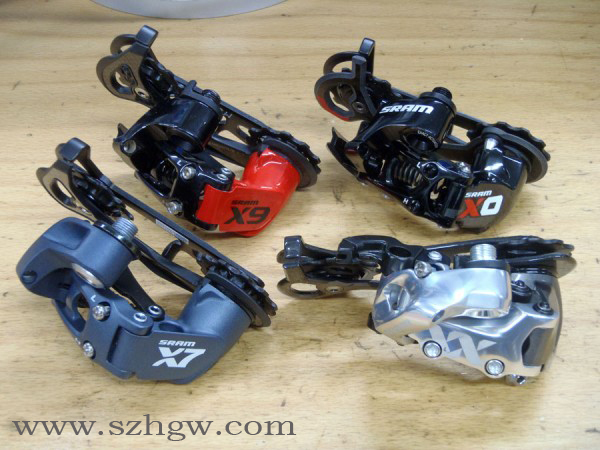
SRAM的普雷斯坎普- 2?0组比较: 在证明了2?0某某的概念,SRAM的移动迅速的高科技滴下来。 一路下来。今年秋季开始,你会看到从900元开始了自行车范围得到由X7为(900美元至2000美元)的做任何事情,它,一切为X0组spec'd。 虽然有很多的滴流下来,直接从某某组的牵引下,也存在一些差异,在某些情况下,改进。与后方derailleurs的X7为X9和团体开始为X0共享相同的基本设计,主要的区别是使用的材料和少材料或更高端的碳纤维。 这些变速器的设计差别很大从某某方面的电缆布线,停止螺钉位置和支点针,等等。看看这些和其他更多的部件后,打破...
发一点SRAM十速的东东
共 48 条评论
帖子已归档
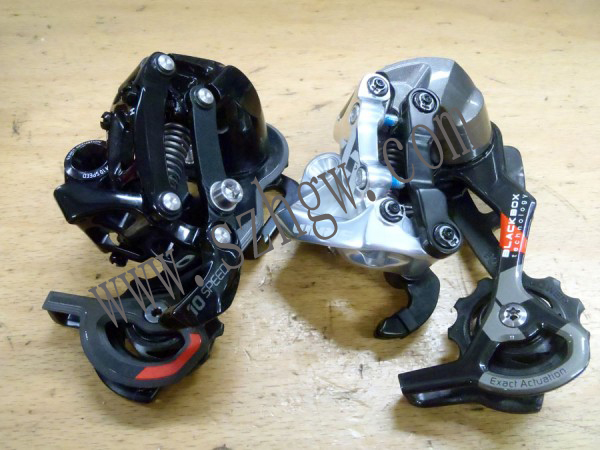
从旧到新为X0版本升级的关键之一是小型的C -剪辑举行到位枢轴销的情况下。 老根X0和当前第XX了/有,它可以(很少)获得敲出来的线索。 新版本,以及X9和X7为,没有他们。 从理论上讲,这意味着derailleurs可能会略少重制,虽然。其他说明上述分歧,包括电缆路由。 二十运行电缆指南的身体内,其他运行到外面。 xX的停止螺丝纵向沿上臂位置,其他人使用在上臂前两站螺钉。 另一个新的升级,是为X0周围的螺丝...他们现在停止线直接进入铝塑料零件拆除。为什么不同? SRAM的产品经理克里斯希尔顿说,他想给的X0(并默认其他团体)的“丘卡-丘卡”转变觉得它总是与趸船觉得某某已。 这是非常轻微的关于对某某为X0与碳铝拇指杠杆放大,对此作出贡献的主要区别是不同的感觉是轻微的调整到了归隐的内部和不同的机械上后方四是那些有预算用于实验可以把某某为X0器和来调整自己喜欢的感觉后方derailleurs,但希尔顿表示,它并不需要很长时间来适应任何你
出人意料的是,即使在X7为一级,碳笼的标准。 该X7为的笼笼后方有一个合金的一半,将有更低的成本为OEM应用的全部合金笼,但他们提供一些不错的美学和轻微的重量,甚至在他们的预算执行组下降。这张照片显示了长期,中期和短期笼选项。 简短的笼主要用于与卫生署自行车在前面和小范围的单齿轮盒。 街道上的字是的X0小组不久将有一个超级短笼道路的选择与使用而设计的磁带。 Cyclocross任何人吗?
这里展示的是GXP版本,但在这两个为X0曲柄GXP和BB30可用。 围绕这三个主轴银螺栓连接蜘蛛的尹博文。 这不同于× ×,其中有1件碳纤维蜘蛛/尹博文它。 SRAM的动力系统产品经理克里斯希尔顿似乎在暗示,这2件式设计方式实际上可能使其在今后至第XX
大环印有正确的尺寸小环使用。 SRAM的2?0 chainrings是围绕着一个齿比1:1.5。 目前,有26和28的iframe - 42T的选择,而是一个新的,更小的24 - 36T齿轮组合是未来的X7为X9和为X0(但不是二十)。
除了具体的齿轮比,SRAM的内建2组的针脚来帮助加减。 显示上方和下方,针脚是为了搭上外链板,并帮助拉环上的大起来。 有两个集线与链是在哪里的小环坐在轮班时间取决于外部板。 因此,如果错过了第一个因为内部板块定位在那里,它会抓住第二针和拉起来。
毫无疑问,有些人可能觉得像碳纤维是一种粗略的曲柄武器材料的选择。 在某些情况下,也许,但肯定不是从实力的角度...而事实上,SRAM是非正式的碳卫生署工作曲柄,他们不会告诉你。显示上方和下方是GXP主轴后,它一直受到SRAM的压力测试。 该GXP主轴钢,当压力同时适用于crankarms,主轴将扭转和弯曲前曲柄受到影响。 GXP主轴的变形,以至于它会绑定约1655磅的压力在底部的支架。 从本质上讲,你的自行车将成为unrideable之前,你永远要打破的crankarms之一。
请贴英文原文,机器翻译的文章看得比较痛苦
高手,晚上就回去发英文版的
那是相当的痛苦,还不如看一半猜一半英文~~
哈哈,之前已经发过相关的东西了,想不到还能看到实物图片的,哈哈,什么时候来个用用
流口水的东西
个人还是习惯用SHIMANO的东东
但十速的飞轮SRAM比SHIMANO好看太多了
这翻译看的!
看得云里雾里的,请贴原文。
SRAM是非正式的碳卫生署工作曲柄
SRAM PRESS CAMP - 2?0 Group Comparisons: After proving the 2?0 concept with XX, SRAM moved quickly to trickle the tech down. All the way down.
Starting this fall, you’ll see bikes from the $900 and up range starting to get spec’d with anything from X7 ($900 to $2000) to the do-it-all X0 group. While there is a lot of trickle down pulled directly from the XX group, there are also a number of differences and, in some cases, improvements.
Starting with the rear derailleurs, the X7, X9 and X0 groups share the same basic design, with the main differences being materials used and a little less material or more carbon fiber on the higher end. These derailleur’s designs vary greatly from the XX in terms of cable routing, stop screw placement and the pivot pins, among others.
Check out more on these and the rest of the components after the break…
One of the key upgrades from the old X0 to the new version is the absence of the small C-clips that hold pivot pins in place. Old X0 and the current gen XX had/have them, which can (rarely) get knocked out on the trail. The new version, as well as the X9 and X7, don’t have them. In theory, this means the derailleurs may be slightly less rebuildable, though.
Other differences illustrated above include the cable routing. XX runs the cable guide to the inside of the body, the others run it to the outside. XX’s stop screws are located lengthwise along the upper arm, the others use two stop screws at the front of the upper arm. Another upgrade for the new X0 is the removal of plastic parts surrounding the stop screws…they now thread directly into the aluminum.
Why the differences? SRAM Product Manager Chris Hylton says he wanted to give the X0 (and be default the other groups) the “chunka-chunka” shift feel that it’s always had versus the lighter feel that XX has. This is ever so slightly amplified by the aluminum thumb lever on X0 versus carbon on XX, the the main differences that contribute to the different feel are slight tweaks to the internals of the shifters and the different mech on the rear D. Those with a budget for experimentation could combine XX and X0 shifters and rear derailleurs to tune the feel to their liking, but as Hylton said, it doesn’t take long to get used to whichever you happen to be riding.
Surprisingly, even at the X7 level, carbon cages are standard. The X7’s cage has an alloy rear cage half, and there will be a lower cost full alloy cage for OEM applications, but they’re offering some nice aesthetics and slight weight drops even on their budget performance group.
This photo shows the long, medium and short cage options. The short cage is mainly intended for DH bikes with a single gear on the front and smaller-range cassette. Word on the street is that the X0 group will soon have a super-short cage option designed for use with a road cassette. Cyclocross anyone?
The new SRAM Truvativ X0 cranksets utilize new ‘Threshold Technology’ carbon layup to create downhill-strong crankarms that use a highly repeatable manufacturing process.
X0 has long been SRAM’s do everything high end group. Since its introduction, X0 shifters and rear derailleurs have been found on everything from World Cup winning XC bikes to top Pro DH and Freeride rigs. So, when they undertook a complete group redesign to fall into their 2?0 movement, they had to create lightweight cranks that could handle the abuse of freeride and downhill, too, because inevitably people will use them there.
We got a look inside the crankarms, the stress testing and how their 2?0 chainrings are designed for quick shifting up and down. Pics and details after the break…
UPDATED 6/15/10: Release dates and info at bottom of post.
For BB30 cranksets, the spindles are aluminum (which, BTW, is a big rearson why BB30 systems are typically a good bit lighter than GXP). They don’t twist like the steel spindles, they just bend at about 1,689 pounds of pressure. This, too, would simply bind up the BB, making it unrideable long before the crank would break.
The tests above place the cranks in a fixed mount to remove other variables. SRAM says they’ve tested it on a bike two and tires pop, wheels crush and suspension blows before any damage to the cranks. The takeaway here is that you’re never going to put 1,600+ pounds of pressure on your cranks. Something else would break first, most likely you.
The crank strength comes from their carbon layup and new design. Previous Truvativ carbon cranks used an alloy skeleton with carbon wrap. The new design uses alloy spindle mounts and pedal mounts that are initially attached to a foam core. This keeps them properly positioned during the carbon layup and reduces weight. The foam is not actually a structural element once the production process is finished.
Lots of layers of carbon surround the foam core.
If you’re a major heel rubber, like me, it could be an issue. This crankset is what I rode for three days of press camp, which included lots of water, mud, snow and other generally nasty conditions for two of the days. This provided some grit to exacerbate the problem, as did the design of the shoes that I wore, but it’s only a cumulative total of about 10 hours of riding. The section at the bottom of the “0″ had visibly worn into the first or second layer of carbon.
Here are a few mitigating factors, though: First, these are preproduction cranks that don’t have the final, dual layer clear coat that should provide some extra protection. Second, if your frame can handle BB30, then your cranks will have better heel clearance and may not rub as much. Even with both of these in mind, you’ll need to weigh the benefit of lighter weight versus potentially rubbing through the carbon and compromising their structural integrity. For those that don’t want to risk it, there’s X9’s hollow forged cranks that are pretty slick…and I’ll cover those in a separate post.
Worth mentioning: SRAM will be sending us final production versions when they’re ready, so I’ll report back on wear and durability in more detail and with longer term riding in the future.
By now, you’ve likely ogled the XX’s X-Dome cassette plenty, but there’s a refresher here and here if you need a fix.
Above is the new X0 (PG1080) cassette, nicknamed ‘Pin-Dome’. Why? For starters, each cog thinned out just like XX, but it’s not machined out of one piece like XX. Instead, each cog a separate stamped steel piece that’s then pinned together and joined to an aluminum 36T large cog. This is better illustrated in the pics after the break.
The X7 and X9 cassettes als0 have stamped steel cogs (including the large one), but they reside on a more traditional forged alloy spider. Even at those lower levels, though, the cogs are pretty heavily cut out, and all of them have SRAM’s X-Glide tooth profiles and ramps.
Make the jump, er, Leap as SRAM would put it, for more info…
SRAM says the pins are extremely strong and won’t loosen under riding regardless how strong you are. The cogs ride on an aluminum center body, with the 4th through 10th cog attached, and the 1st, 2nd and 3rd loose as shown in the top pic. This is actually the first time they’ve shown the new X0 1080 cassette. The pics and specs shown in the original X0 post we did (with info sent from SRAM) showed the XX cassette and premature info
Besides the pins being a strong connection, once the lockring is tightened, it slightly compresses the cassette and ensures everything stays in place. That compression actually flares each cog ever so slightly, and SRAM compensated for that in the design such that when it’s installed, the cogs are properly spaced and positioned to work correctly. At launch, the X0 cassette will only be available in an 11-36T option.
The X9 cassette, above, uses all stamped steel cogs mated to an aluminum carrier and gets an aluminum lockring.